Compare · Systems
Compare the four systems
Specs only, no ranking. The four series do different jobs: the first table shows which jobs each one does, the second lists the published figures, and the four steps narrow it down before a survey.
Site survey · sizing · installation · maintenance, UAE-wide
Compare
What each system does
Read the rows, not the columns: the question is which jobs your space needs.
| What it does | Series RRecirculating ducted | Series FFresh-air + heat recovery | Series HHigh-capacity | Series TFresh-air treatment |
|---|---|---|---|---|
| Removes moisture from the air | Yes | Yes | Yes, large loads | Yes, the incoming air |
| Brings in outdoor air | No, recirculates | Yes | Per project | Yes |
| Recovers energy from the exhaust air | No | Yes | No | No |
| Has its own exhaust path | No | Yes | Per project | Yes |
| Filters the air it handles | Yes, three stages | Yes, three stages | Yes, three stages | Yes, three stages |
| Where the unit sits | Ceiling void | Ceiling void, near an outside wall | Plant room or large void | Ceiling void, near the intake |
| Typical spaces | Villas, apartments with a working fresh-air supply | Sealed villas and apartments, hotel rooms | Warehouses, hotels, pools, showrooms | Offices, hotels, villas with high fresh-air demand |
| Often paired with | Series T or V for fresh air | Series R on large floors | Existing HVAC, after review | Series R for the recirculated air |
Technical data
Published figures, side by side
Each column is one datasheet at its stated test conditions. Rows without a published figure are marked, not guessed.
| Property | Series R | Series F | Series H | Series T |
|---|---|---|---|---|
| Capacity (L/day at 30 °C / 80 % RH) | PLACEHOLDER | PLACEHOLDER | PLACEHOLDER | PLACEHOLDER |
| Airflow (m³/h) | PLACEHOLDER | PLACEHOLDER | PLACEHOLDER | PLACEHOLDER |
| External static pressure (Pa) | PLACEHOLDER | PLACEHOLDER | PLACEHOLDER | PLACEHOLDER |
| Fresh-air supply / exhaust (m³/h) | PLACEHOLDER | PLACEHOLDER | PLACEHOLDER | PLACEHOLDER |
| Filtration stages and grades | PLACEHOLDER | PLACEHOLDER | PLACEHOLDER | PLACEHOLDER |
| Noise (dB(A), distance and standard) | PLACEHOLDER | PLACEHOLDER | PLACEHOLDER | PLACEHOLDER |
| Power (W, V, Hz) | PLACEHOLDER | PLACEHOLDER | PLACEHOLDER | PLACEHOLDER |
| Refrigerant | PLACEHOLDER | PLACEHOLDER | PLACEHOLDER | PLACEHOLDER |
| Dimensions (mm) | PLACEHOLDER | PLACEHOLDER | PLACEHOLDER | PLACEHOLDER |
| Weight (kg) | PLACEHOLDER | PLACEHOLDER | PLACEHOLDER | PLACEHOLDER |
| Controls | PLACEHOLDER | PLACEHOLDER | PLACEHOLDER | PLACEHOLDER |
| Duct spigots | PLACEHOLDER | PLACEHOLDER | PLACEHOLDER | PLACEHOLDER |
| Condensate connection | PLACEHOLDER | PLACEHOLDER | PLACEHOLDER | PLACEHOLDER |
| Operating range | PLACEHOLDER | PLACEHOLDER | PLACEHOLDER | PLACEHOLDER |
| Heat-recovery efficiency (%) | PLACEHOLDER |
How to choose
Four questions that narrow it down
The same questions our engineer asks on the first call.
- 01
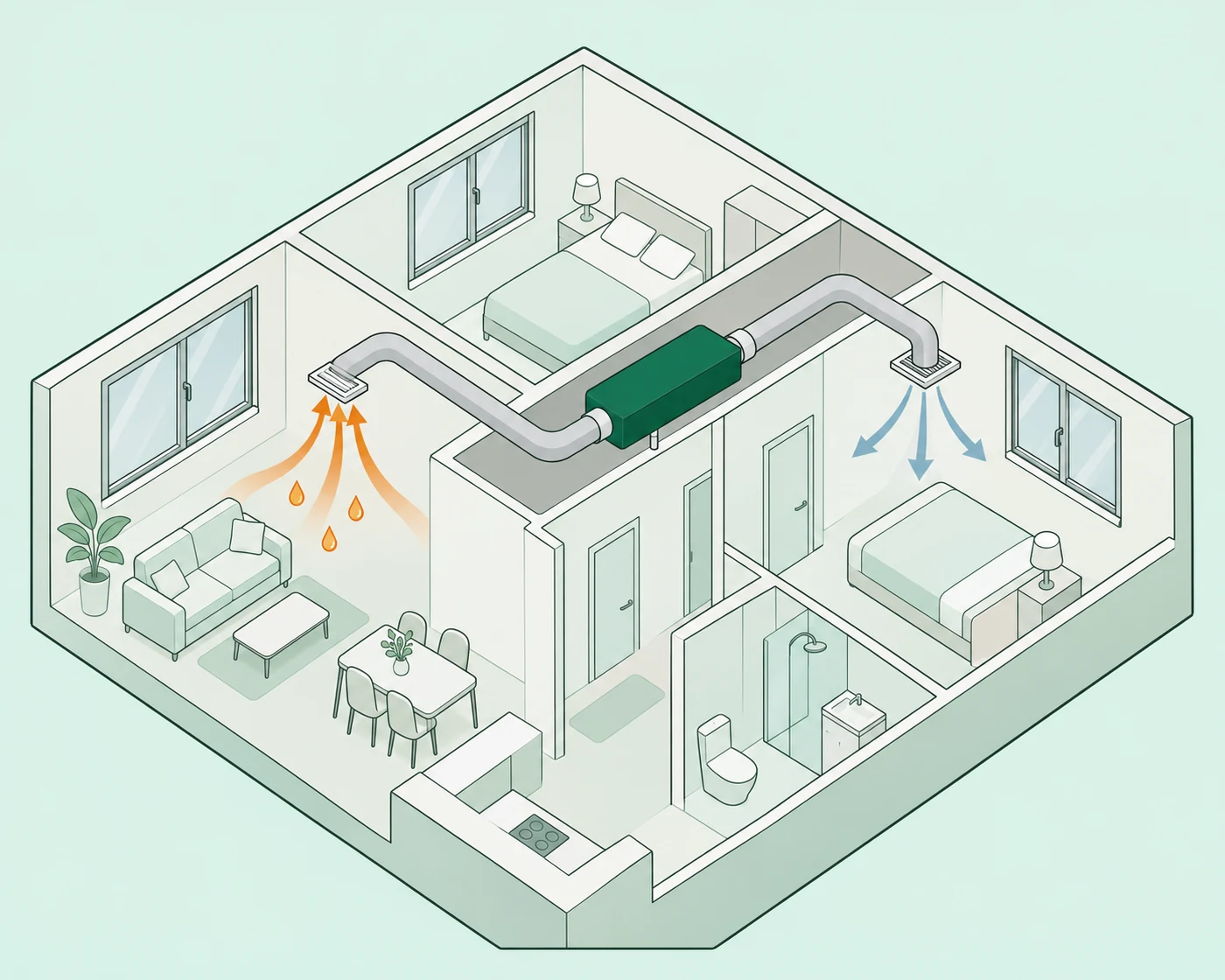
Is the space sealed or ventilated?
A villa with a working fresh-air supply usually needs Series R to dry the air it already has. A sealed, double-glazed apartment or villa has no way to get fresh air in without letting humidity in, so Series F or Series T is the starting point.
- 02
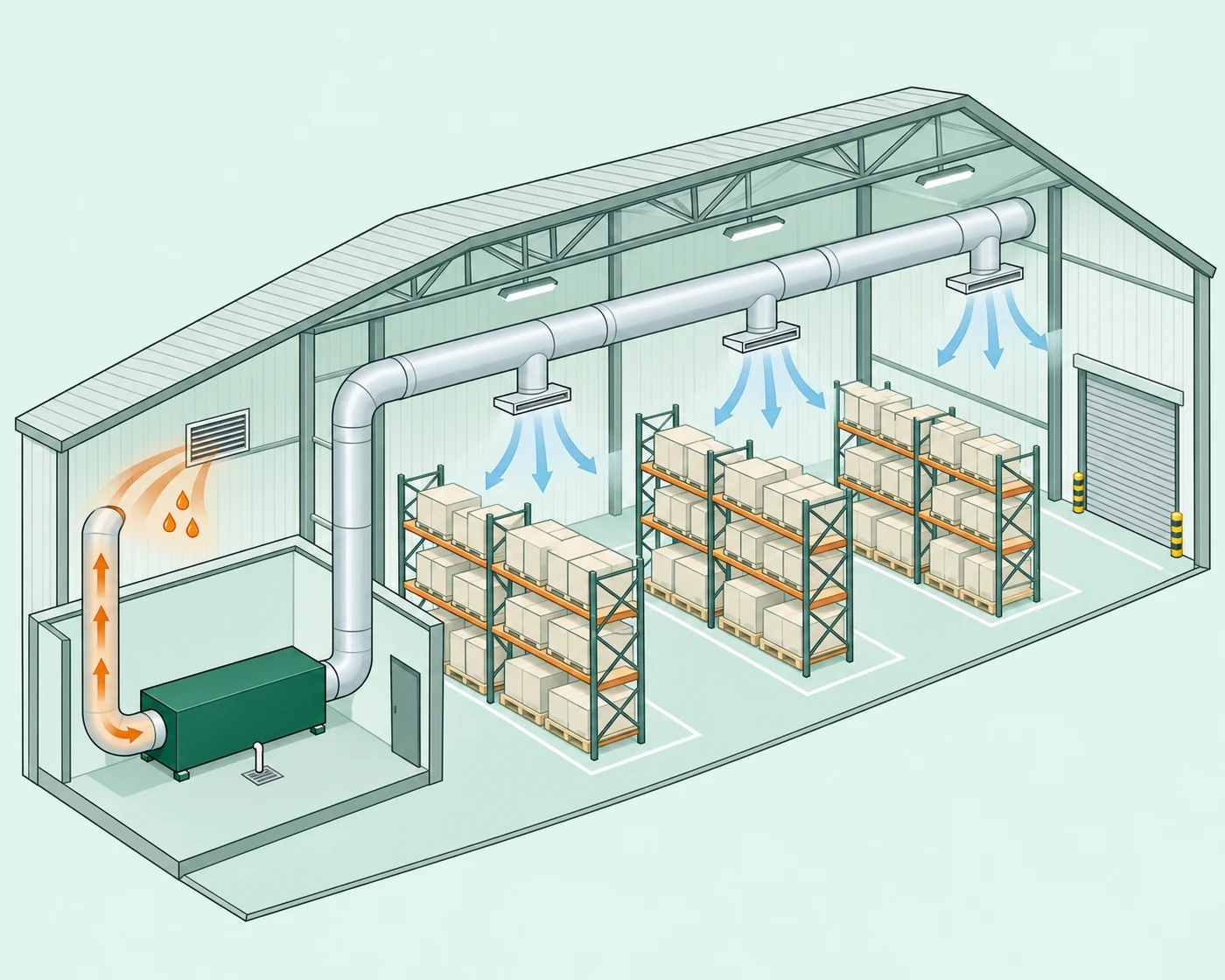
How large is the moisture load?
Occupancy, showers and kitchens, pools, loading doors and stored goods set the load, not the floor area. Homes and hotel rooms sit within Series R and F. Warehouses, pool halls, showrooms and server rooms move to Series H.
- 03
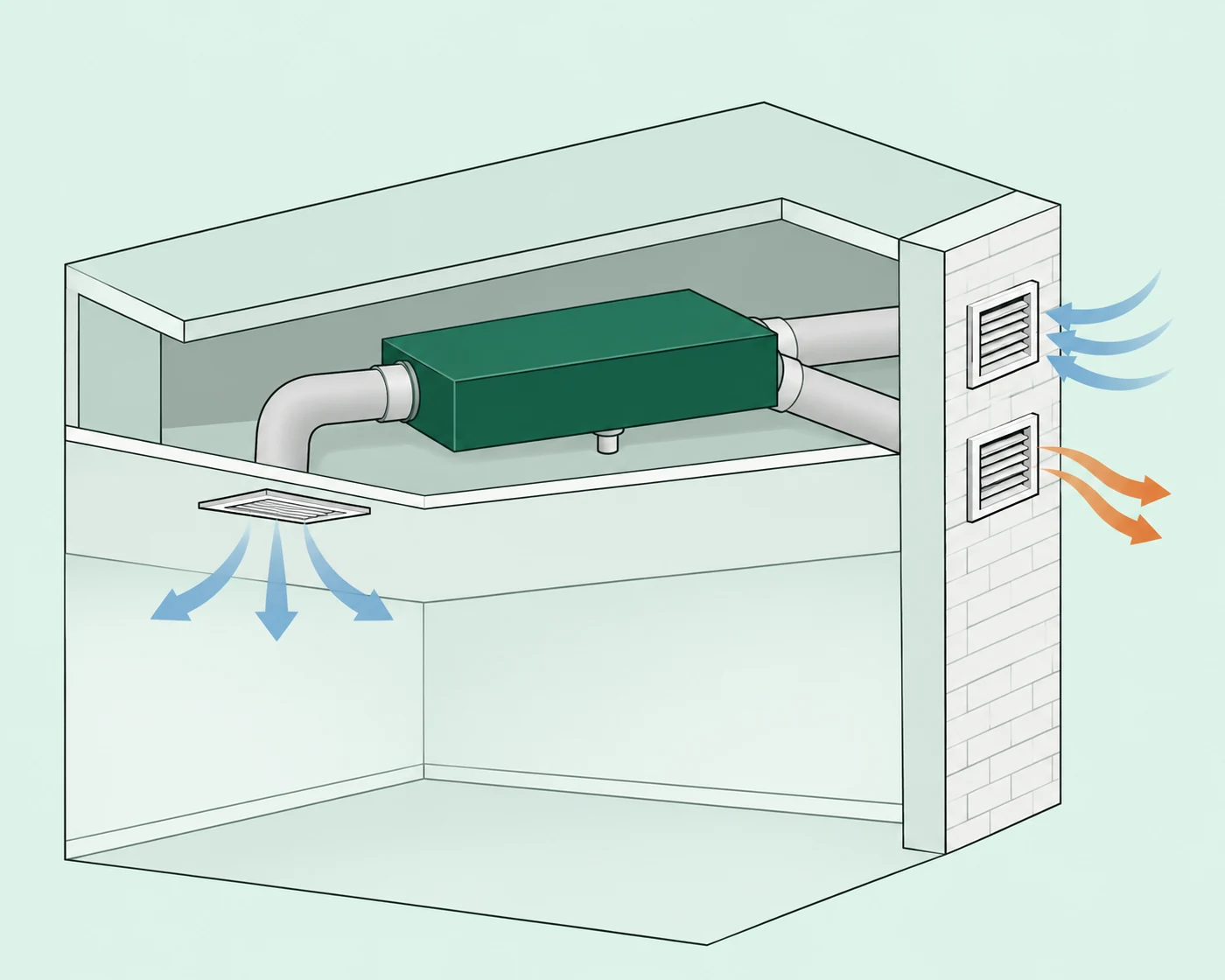
Does the space need outdoor air?
If fresh air is required for occupants or by code, choose between Series F (fresh air, exhaust and energy recovery in one unit) and Series T (fresh-air treatment with its own exhaust path, no heat-recovery core). Series V provides balanced ventilation without dehumidification.
- 04
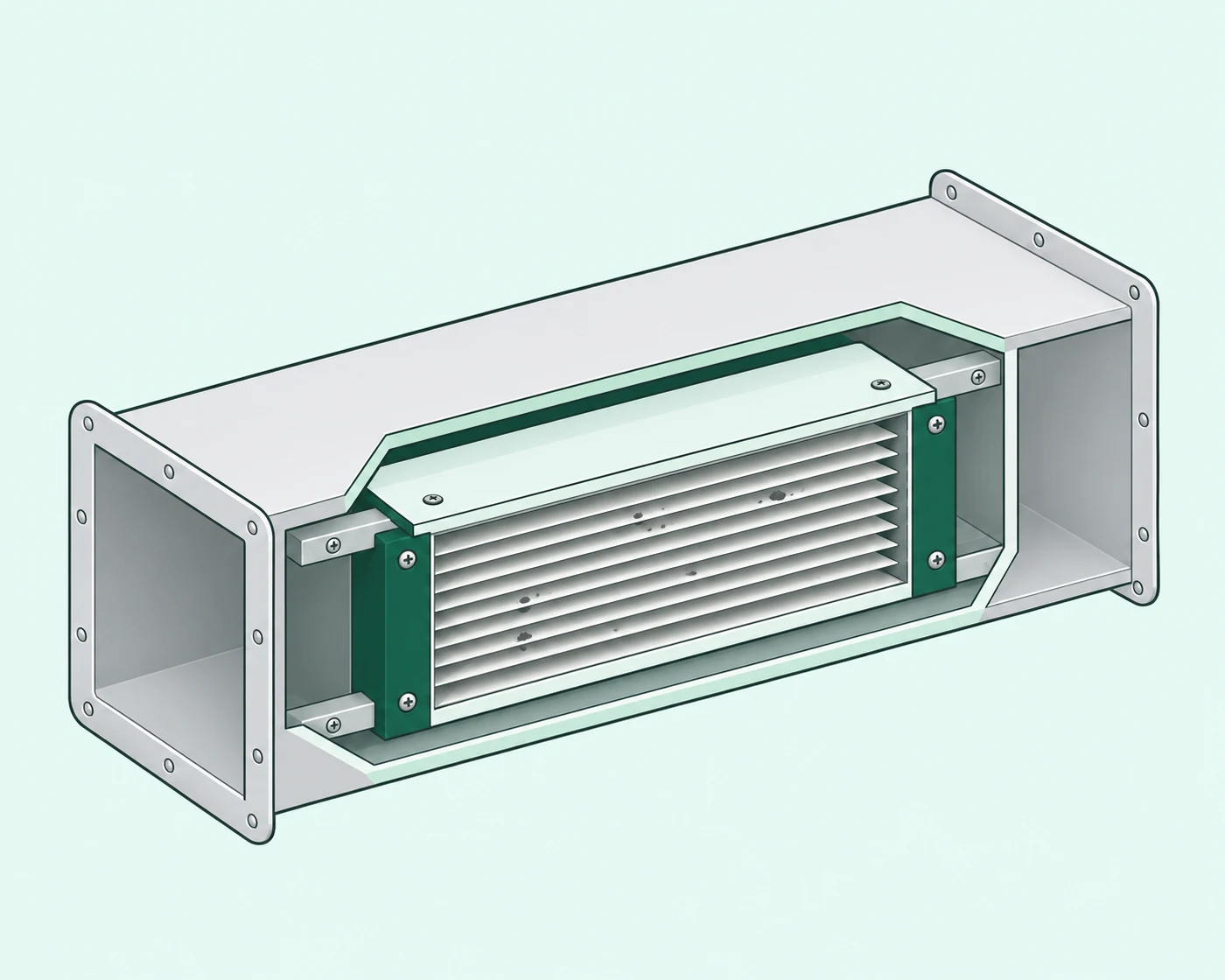
Is the problem dust, not humidity?
If readings are already in range but dust and allergens are the complaint, Series A at the AC return filters the whole return-air flow. Every dehumidifying system also carries three filter stages, so filtration is never an add-on.
Two units that complete the range
Series V is a balanced energy-recovery ventilator for new builds and renovations; it does not dehumidify and pairs with Series R. Series A is an electrostatic purifier at the AC return for dust and allergens, not humidity.
Questions about choosing
Short answers; the survey settles the rest.
Which system suits a villa?
Most villas with a working fresh-air supply start with Series R, one unit per zone or floor, sized to the moisture load. A sealed villa, or one where the owners want filtered fresh air, moves to Series F or a combination of Series R and Series T. The survey decides.
Which system suits a sealed high-rise apartment?
Double-glazed apartments trap moisture from showers, cooking and laundry and have no clean way to bring fresh air in. Series F brings in filtered, dried outdoor air, exhausts stale air and recovers energy from the exhaust. Where only humidity control is needed and ventilation exists, Series R is the simpler choice.
Can systems be combined?
Yes. A common pairing is Series R for the recirculated air with Series T or Series V for the fresh air, each on its own ducts. Large buildings often use several Series H units by zone. One controller per unit; integration with a building management system is reviewed per project.
Is there a system that only ventilates or only filters?
Yes. Series V ventilates with energy recovery and does not dehumidify. Series A filters the AC return air electrostatically and does not dehumidify. Both are listed under the four main systems.
Which system is the cheapest?
Prices are on request and quoted after a survey, so no system is ranked here. In general the installed cost rises with capacity, with the number of duct connections and with the length of the duct and drain runs.
Still between two systems? Ask.
Send the floor plan and a humidity reading if you have one. We reply with the system that fits.