The system, explained
How a ducted dehumidifier system works
Humid room air leaves through a return grille, passes a cooling coil that condenses the moisture, is filtered and comes back drier through the supply grilles. The unit sits above a false ceiling or in a plant room, and the water goes to a plumbed drain.
Site survey · sizing · installation · maintenance, UAE-wide

Everything the system does, in order.
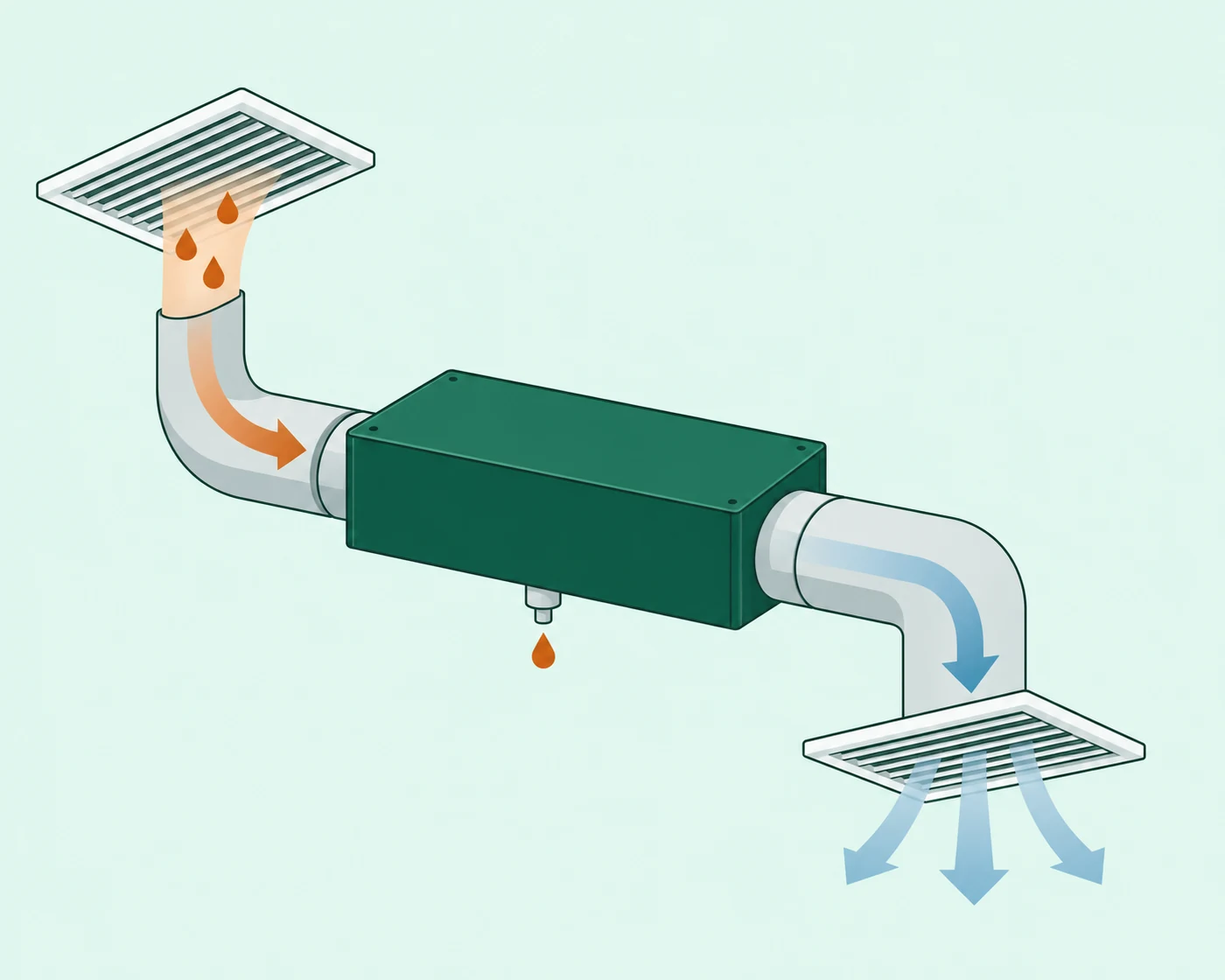
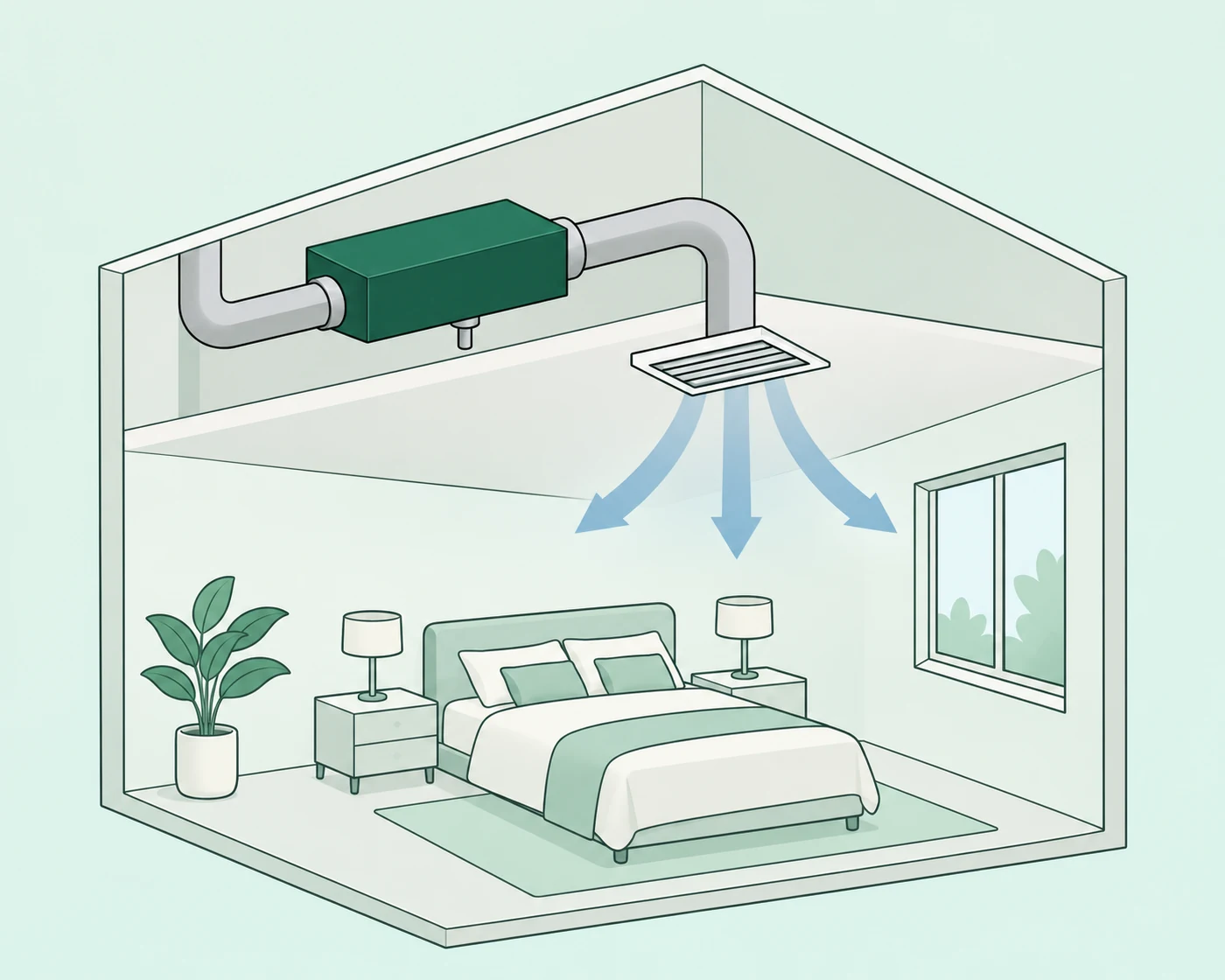
Air leaves the room through a return grille and comes back drier and cleaner through the supply grille. The unit sits above the ceiling; you see grilles and a wall controller, nothing else.
- 01
Collect
A return duct draws humid room air into the unit. The return grille sits where the damp air gathers: a corridor ceiling, a landing, the room that always feels heavy.
- 02
Dehumidify
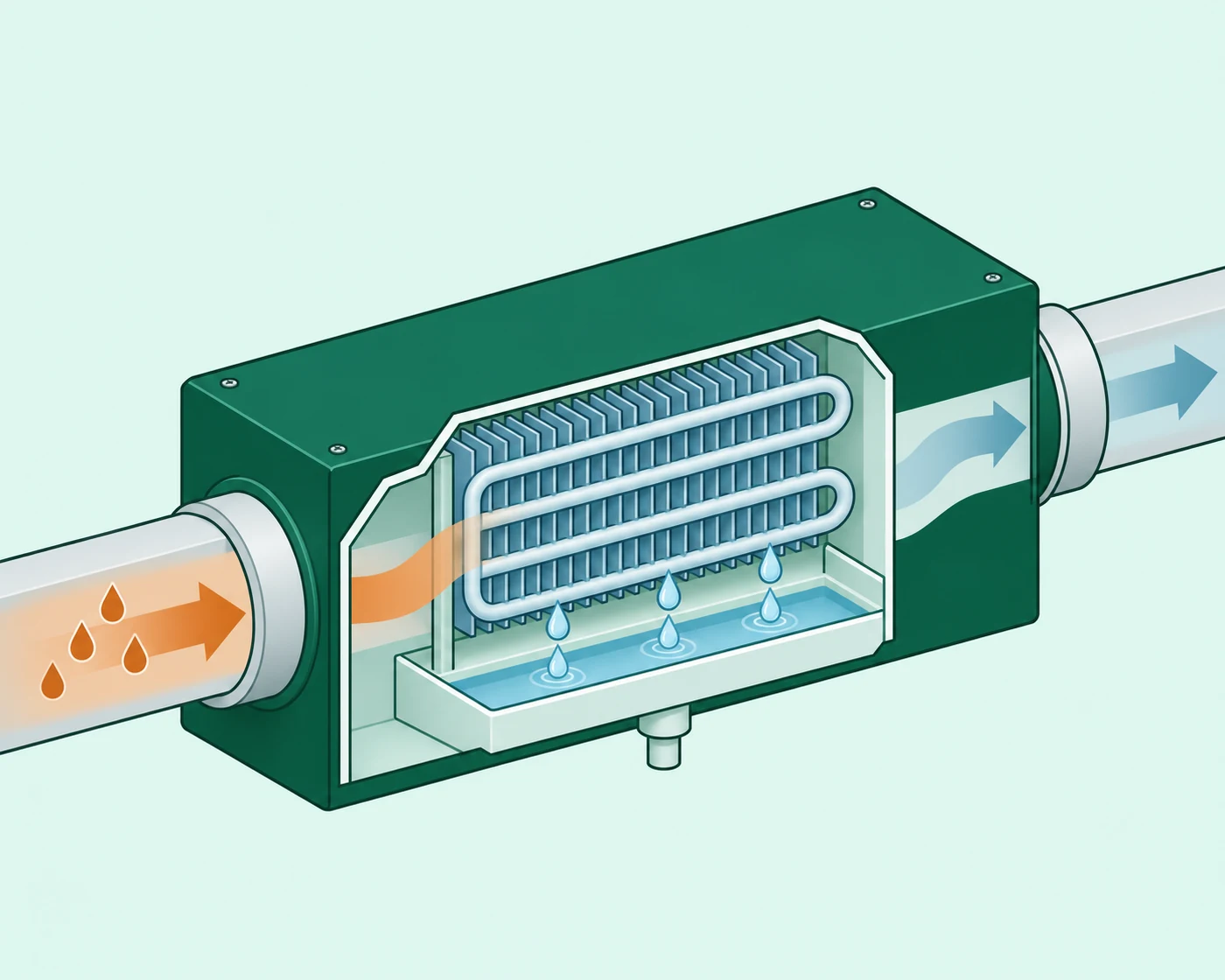
Inside the unit the air crosses a cold coil. Moisture condenses on it and drips away as water, so the air that leaves holds less water than the air that came in. The capacity in litres a day is on each system's datasheet.
- 03
Drain
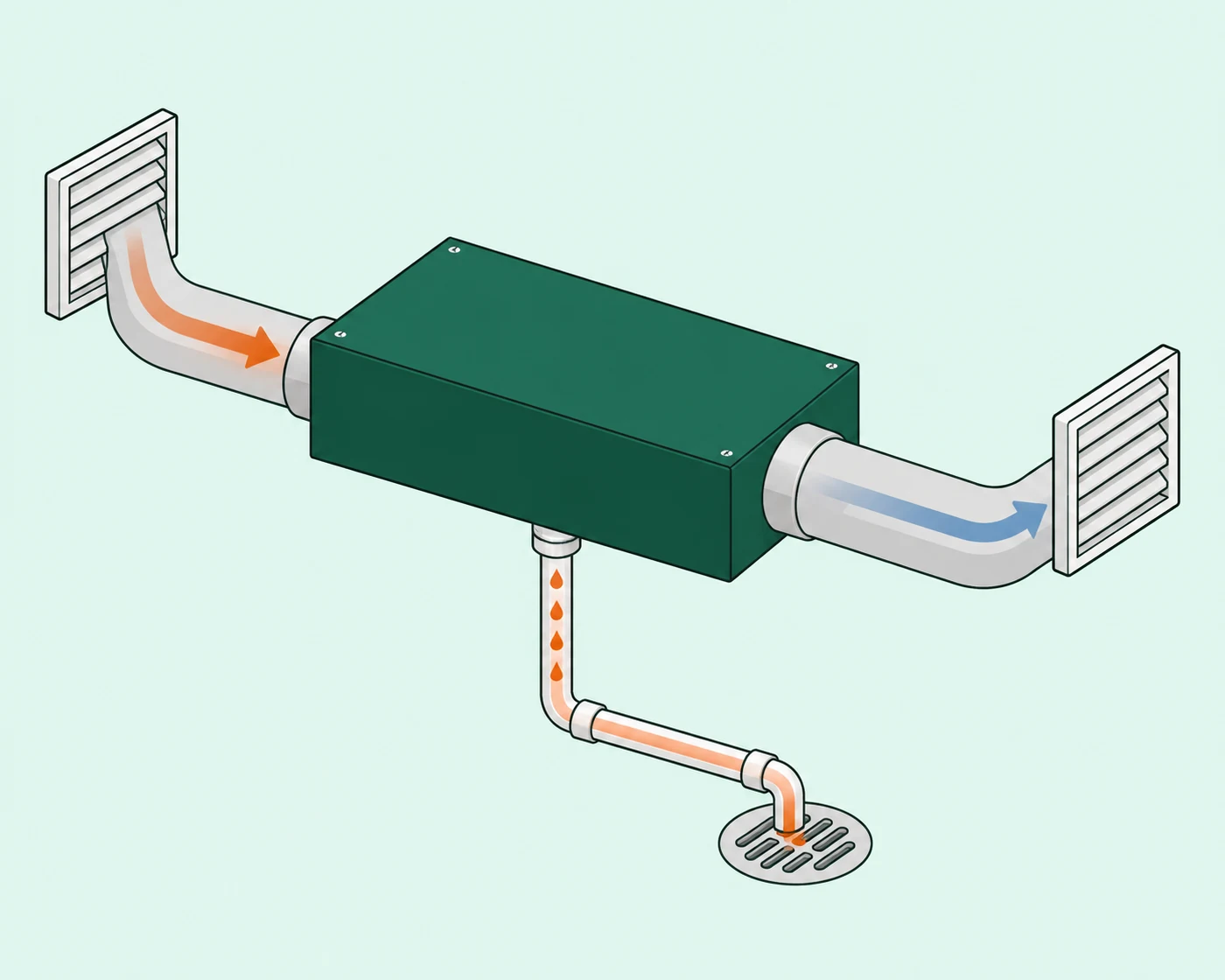
The condensate runs to a plumbed drain with a trap, the same way an AC indoor unit drains. There is no tank to empty and no hose across the floor, which is why the system keeps working while you are away.
- 04
Filter
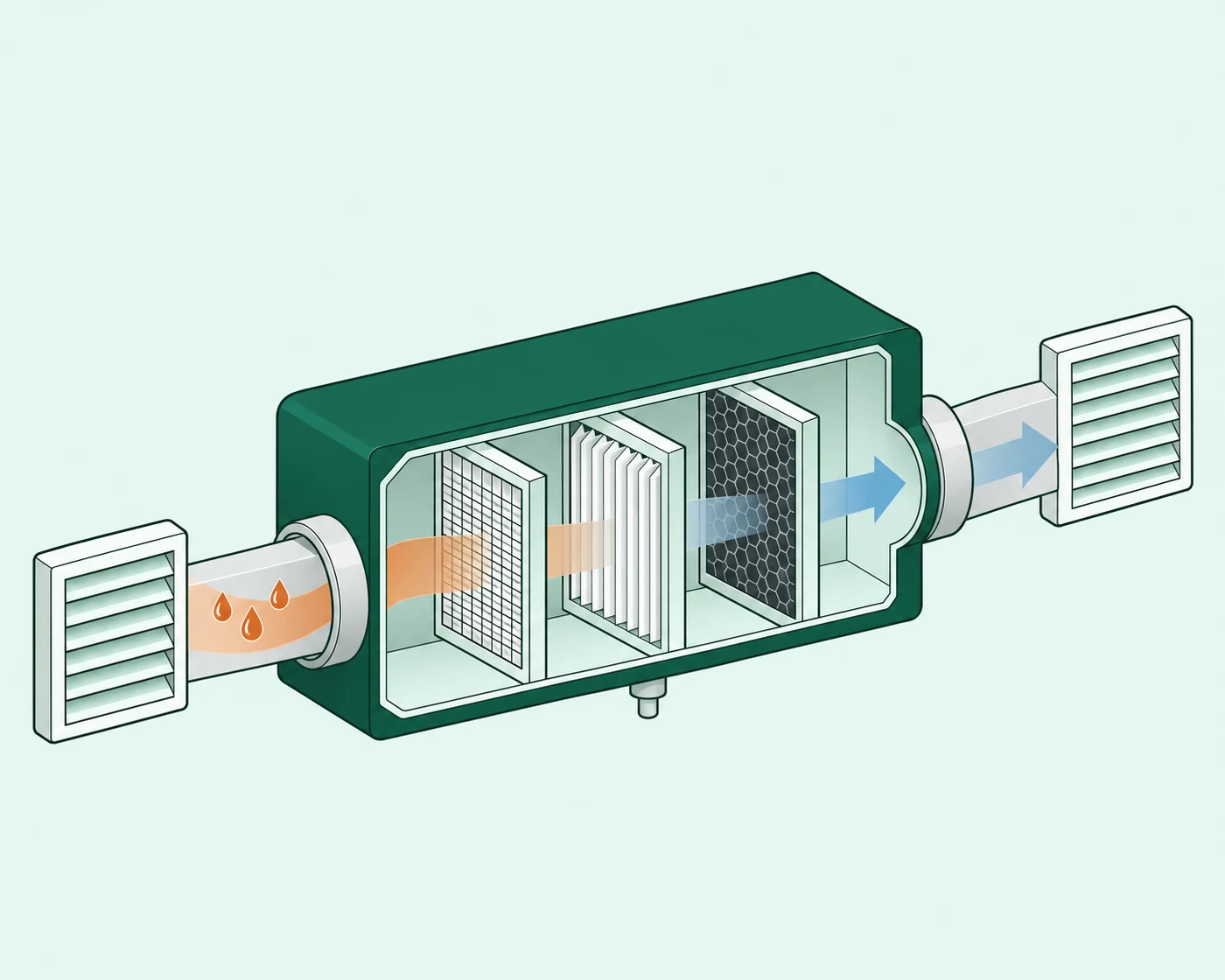
The dried air passes the unit's filter stages before it returns to the rooms. The grades and replacement intervals are on the datasheet, and the controller tells you when a filter is due.
- 05
Return
Dry, filtered air comes back through the supply grilles. A humidistat holds the setpoint you choose: the unit runs when the reading is above it and rests when it is below.
Installation, made simple.
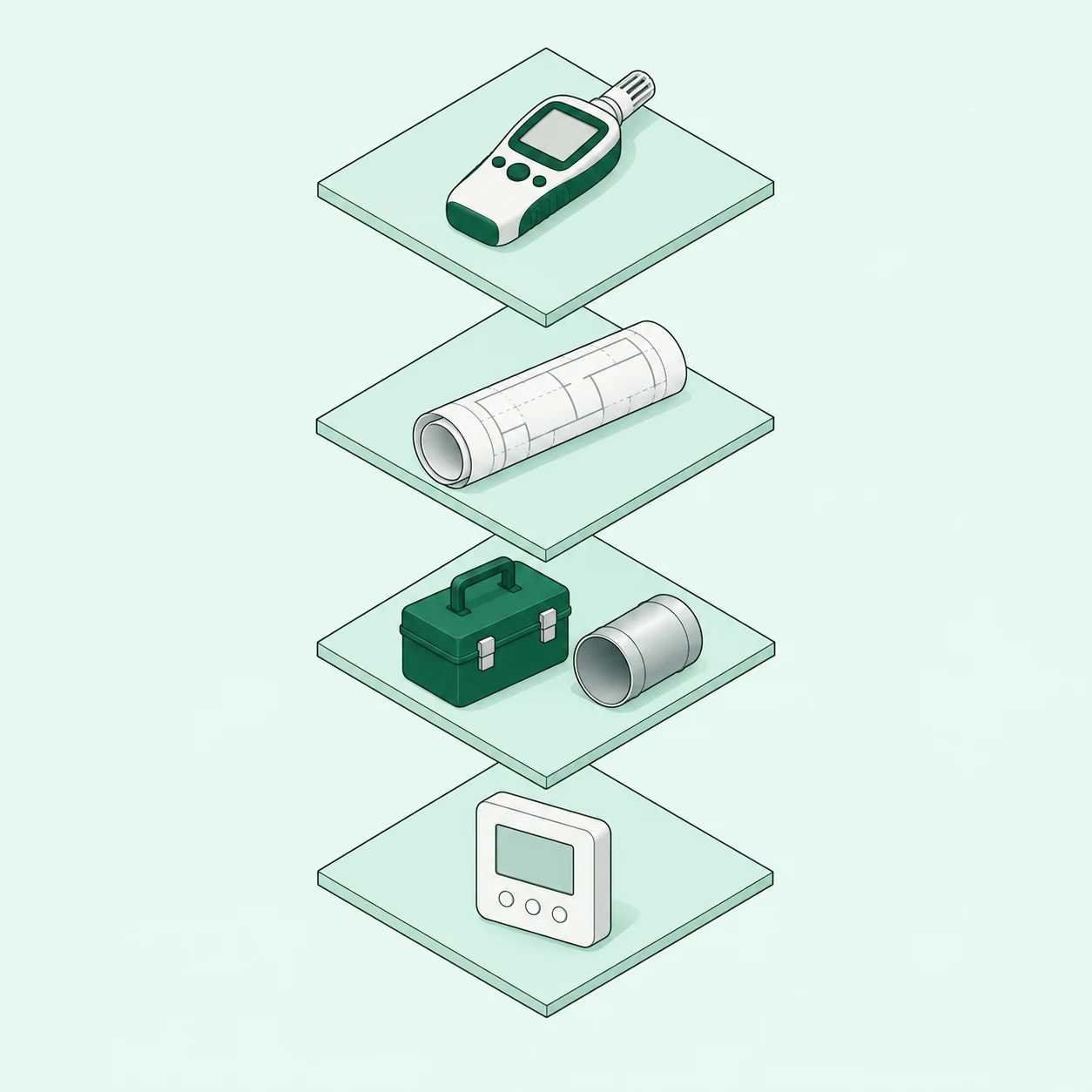
From survey to handover, one team. The questions people ask most are who installs it and how long it takes; here is the sequence.
Readings and routes
Site survey
Humidity and temperature readings room by room, a look inside the ceiling void, the drain and power options, and the duct routes to each grille.
By moisture load
Design and sizing
The unit is chosen from the measured moisture load, the fresh-air need and the duct lengths, never from the floor area alone. You get a drawing and a fixed quote.
Dedicated ducts
Installation
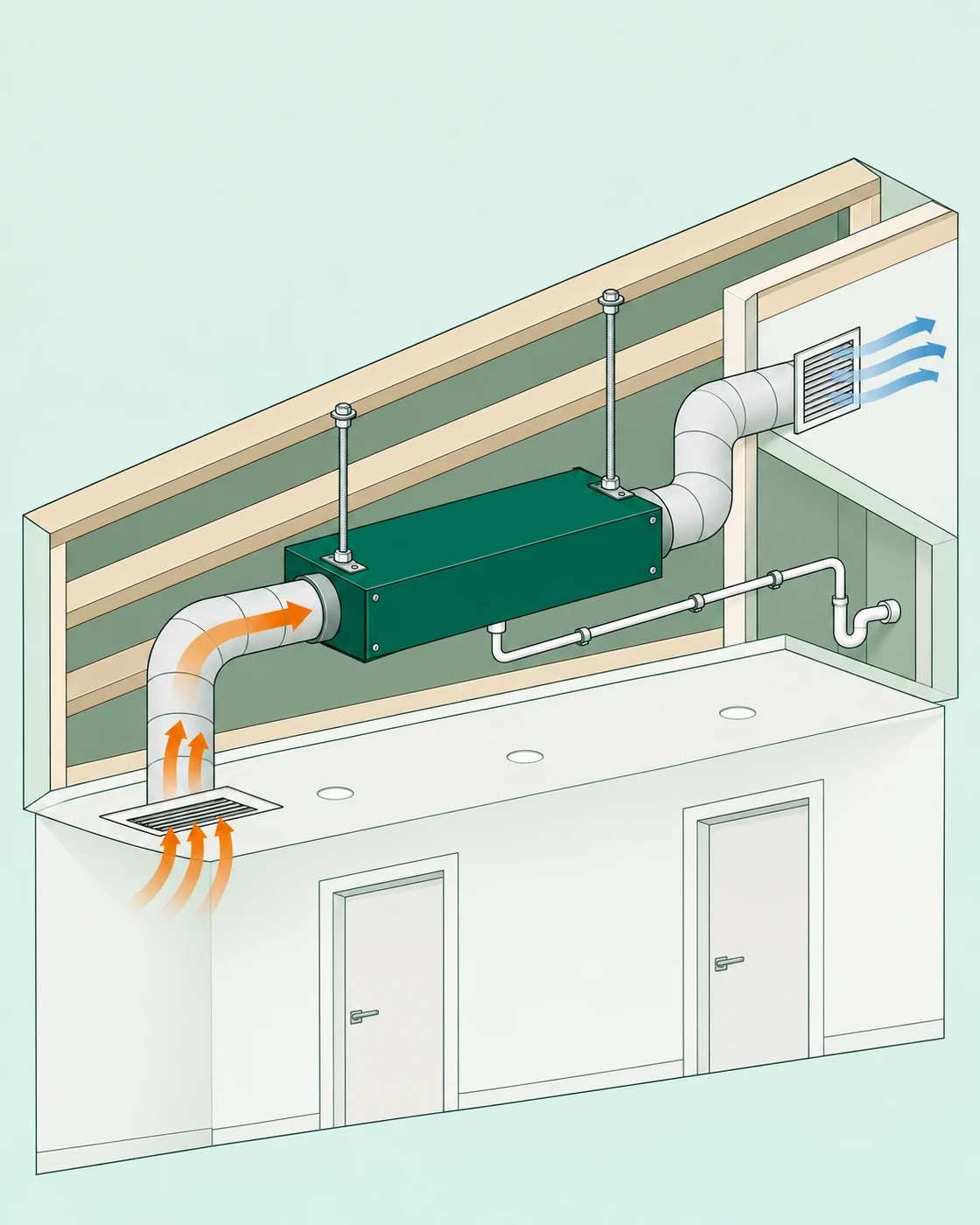
The unit goes above the false ceiling or into a plant room on its own return and supply ducts, never into the AC ductwork, with a plumbed condensate drain and its own power supply.
Setpoints and report
Commissioning and handover
We set the humidity setpoint, check readings at every grille, show you the controller and hand over a report with the readings and the maintenance plan.
Ducted or portable
Why a ducted system, not a portable unit.
Each point answers an objection UAE owners raise about portable units in published reviews and news reports.
Invisible installation
The unit sits above the ceiling. In the room you see a grille and a wall controller, not a box on the floor.
Whole-home coverage
One system serves every room on the duct run. Reviews note that whole-villa control with portables often needs several units.
Nothing to empty
The condensate goes to a plumbed drain. Portable tanks of 4 to 5 litres can fill in under a day in peak summer, according to a UAE buying guide.
Quiet in the bedroom
The compressor is in the ceiling void or plant room, not beside the bed. Noise at the grille is published on each datasheet.
Filtered air, not just drier air
Every unit carries filter stages on the return path, so the air that comes back is cleaner as well as drier. Grades are on the datasheet.
Works while you are away
On the humidistat and the plumbed drain, the system runs through a long summer trip, the situation behind most mould reports after a holiday.
Compare your options before you buy.
Cheapest first, ours last. Every figure in the table has a published source; our own running cost appears once it is measured.
| What matters | One portable unitSits in a room, needs a socket | AC dry modeThe air conditioner you already have | Several portablesOne unit per damp zone | Ducted systemAbove the ceiling, on its own ducts |
|---|---|---|---|---|
| Holds a set humidity | In one room, while the tank has space | Cannot usually hold a target level[1] | Room by room, each on its own dial | Yes, one setpoint for every room on the duct run |
| Covers the whole home | No, a supplementary tool for one damp zone[2] | Only the rooms the AC serves, and only while it runs | Whole-villa control often needs several units[3] | Yes, every room with a supply grille |
| Noise in the room | Compressor in the room; one 30 L model is listed at 57 dB[4] | The AC's own noise | One compressor in every room that has a unit | The unit sits above the ceiling; only a grille is in the room |
| Emptying and drainage | A tank; a 20 L unit can fill a 4 to 5 L tank in under a day[3] | Drains through the AC | One tank per unit, or hoses across the floor | Plumbed condensate drain, no tank |
| What you see | A box on the floor | Nothing new | A box in every zone | Grilles and a wall controller |
| Air filtration | A dust filter on some models | The AC return filter only | A dust filter on some models | Filter stages on the unit, as listed on the datasheet |
| Works while you are abroad | Until the tank is full, unless a hose is fitted | Only if the AC is left running the whole trip[5] | Until the first tank is full | Yes, on the humidistat, with the drain plumbed |
| Indicative cost | About AED 540 to 850 per unit, as listed on Amazon.ae, November 2026[3] | No extra equipment | Two or three units, plus the emptying | Price on request, after a survey |
| Running cost | About AED 14 to 23 a month per unit at eight hours a day, an estimate[6] | Part of the AC bill | Multiplied by the number of units | Published per system once measured at DEWA tariffs |
Sources
- 1.LG, When to use a dehumidifier vs AC dry mode
- 2.Gulf News, Is humidity building up in your UAE home right now?
- 3.Clean Living UAE, Best dehumidifiers in the UAE, updated 5 November 2026
- 4.Gulf News, 5 best dehumidifiers in UAE for 2024
- 5.Khaleej Times, 2024, UAE residents grapple with mould in homes as firms report up to 70 % rise in inquiries over summer
- 6.BuyVerdict, Best dehumidifier UAE, updated 5 November 2026 (estimate, not a measurement)
FAQ
Questions people ask
Does it connect to my AC ducts?
No. The dehumidifier runs on its own return and supply ducts and is never connected into the AC ductwork. The two systems do different jobs: the AC controls temperature, the dehumidifier controls humidity. Keeping them separate means each can run on its own schedule and the AC's static pressure and drain are untouched.
Where does the unit sit?
Above a false ceiling, usually in a corridor, bathroom or utility ceiling with an access panel, or in a plant room or garage for larger systems. The survey checks the void height, the route for the ducts and the nearest drain and power point before the position is fixed.
Does it need its own drain?
It needs a plumbed condensate drain with a trap, like an AC indoor unit. Where an existing AC drain line is close and has the capacity, the survey decides whether it can be used; otherwise a new line is run. There is no tank to empty in either case.
Can it be fitted in an existing villa or apartment?
Yes, in most buildings with a false ceiling and access to a drain. Retrofits use the existing ceiling void for the duct runs and add grilles where the survey shows they are needed. New builds and renovations are simpler still, because the ducts go in before the ceilings close.
Who installs and commissions it?
Our own team surveys, installs and commissions the system, then services it. You deal with one contact from the first WhatsApp to the handover report, and the same team comes back for filter changes and checks.
Does it work with the AC switched off while I travel?
Yes. The dehumidifier runs on its own humidistat and drains to a plumbed line, so it does not depend on the AC being on. Many owners leave the AC on a mild setting as well; the dehumidifier keeps the humidity in check either way.
Tell us the space. We size it and quote it.
Floor plan or photos on WhatsApp are enough to start. A survey confirms the rest.