Spaces
Humidity control for villas in Dubai and the UAE
A villa in Dubai or Abu Dhabi runs on several AC units that cool but do not hold a humidity target. Ground floors, the majlis, kitchens and closed wardrobes drift above 60 % RH through the summer. One concealed ducted system per zone holds the whole villa at a set humidity, drains to a pipe, and leaves only grilles on show.
Site survey · sizing · installation · maintenance, UAE-wide

What you are seeing
Doors and gates that jam in summer
Wooden doors, wardrobe fronts and even the front gate swell with moisture. Residents in Jumeirah and Remraam reported exactly this in the 2024 summer.
Damp spreading across the ground floor
Kitchen cupboards that smell of damp, soft plaster at the base of walls, mould behind the sofa. The ground floor is coolest, so moisture condenses there first.
Three portable units and still a musty smell
Portable units treat one room each, fill their tank in under a day in peak summer and run at bedroom-unfriendly noise levels. They patch a room; they do not hold a villa.
Why it happens
A villa has more external wall, more roof and more doors opening to the garden than an apartment, so it takes in more moisture. The AC removes some of it while the compressor runs, then stops when the room reaches temperature. In the cooler rooms it barely runs at all, so humidity climbs there first: the majlis, the maid's room, the ground-floor corridor.
Local guidance frames a portable unit as a supplementary tool for one damp room, and notes that whole-villa control often takes several of them. A ducted system does the opposite: it treats the air of a whole zone through its own return and supply ducts, from one controller, with a permanent drain.
We install across Dubai's villa communities, from Jumeirah and Al Barari to Arabian Ranches, Dubai Hills and the Springs, and in Abu Dhabi, Sharjah and the Northern Emirates.
What changes with a ducted system
One setpoint for every floor, from one wall controller.
No units on the floor, no tanks to empty: the condensate goes to a drain.
Doors, wardrobes, leather and gypsum stop absorbing moisture.
Which system fits
Each pick is a product family, not a model. The survey decides the capacity and the number of units; nothing is sized by floor area alone.
Typical system
Series R: recirculating ducted dehumidifier
Dries the air already in the building and returns it through its own ducts. The usual choice for villas, apartments, offices and basements.
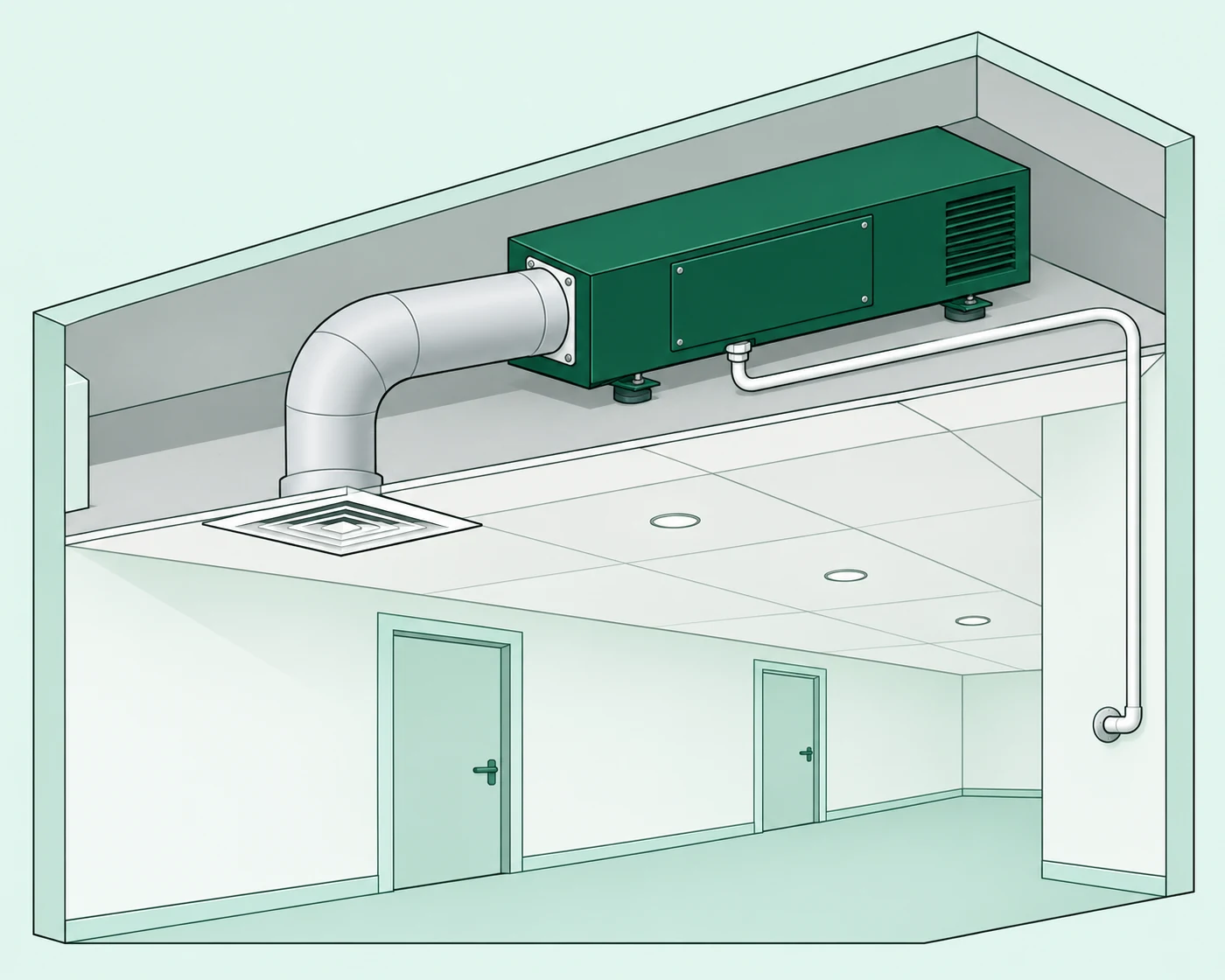
Most villas need the air they already have dried and filtered. One recirculating unit per floor or zone sits in the ceiling void and serves the rooms through short duct runs.
- Sits above the false ceiling of a corridor or bathroom, with an access panel
- Needs a drain point and a power supply; never connects into the AC ductwork
- One controller per zone, or one for the villa
Typical system
Series F: fresh-air dehumidifier with heat recovery
Brings in filtered outdoor air, dries it and recovers energy from the exhaust. For buildings that need a fresh-air supply as well as humidity control.
If the villa has a fresh-air duct, or you want filtered outdoor air rather than opening windows, the fresh-air unit dries that air on the way in and recovers energy from the exhaust.
- Replaces the untreated fresh-air intake
- Suits villas with a plant room or a large void above the garage
- Often combined with Series R for the ground floor
How we fix it, in order
Three visits, in this order. The survey is free of charge; the quote follows the sizing, never the other way round.
- 01
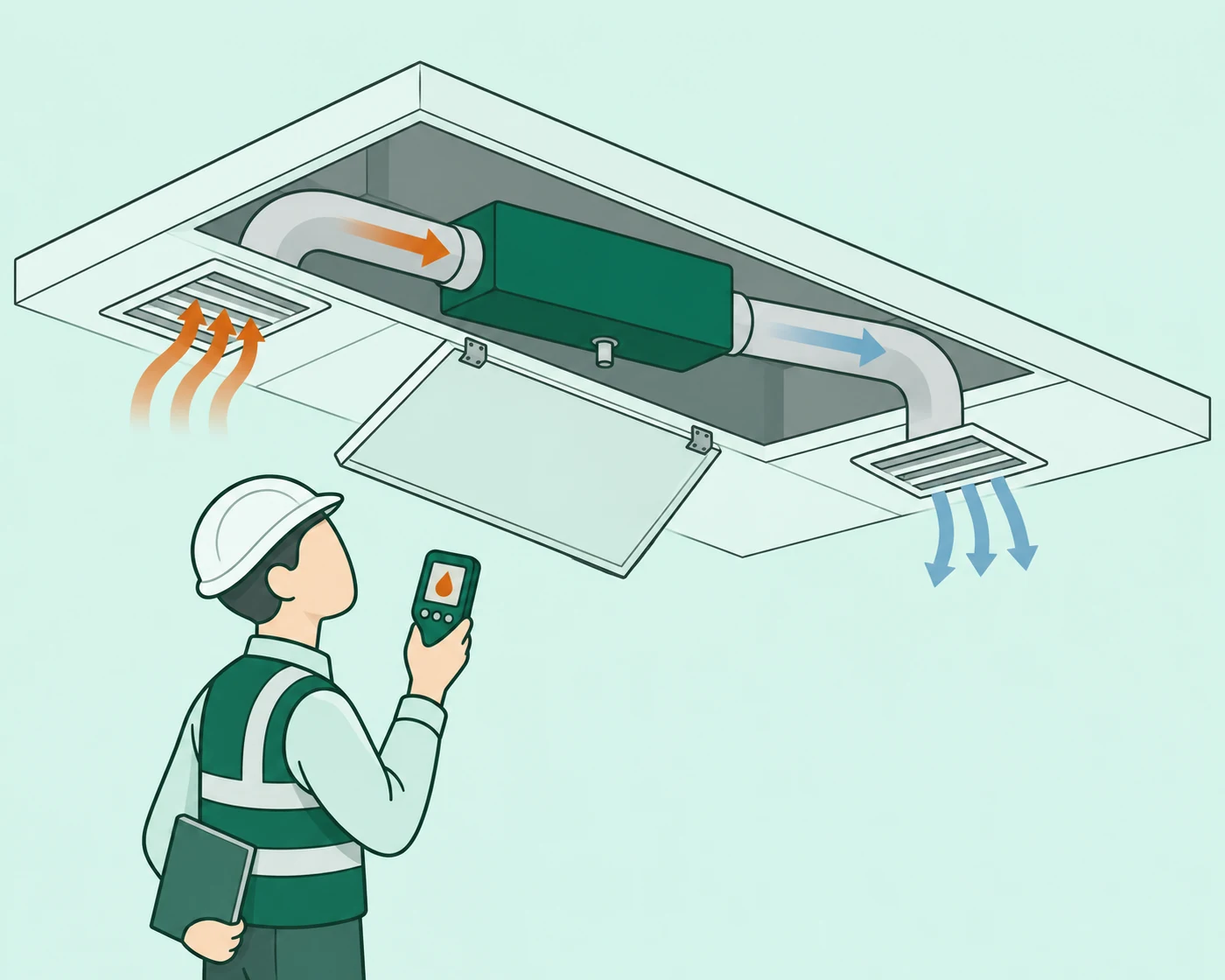
Survey the villa
Humidity readings in every room and inside the wardrobes, ceiling void depth, duct routes, drain points and power. We ask how the AC is used and whether the house stands empty in summer.
- 02
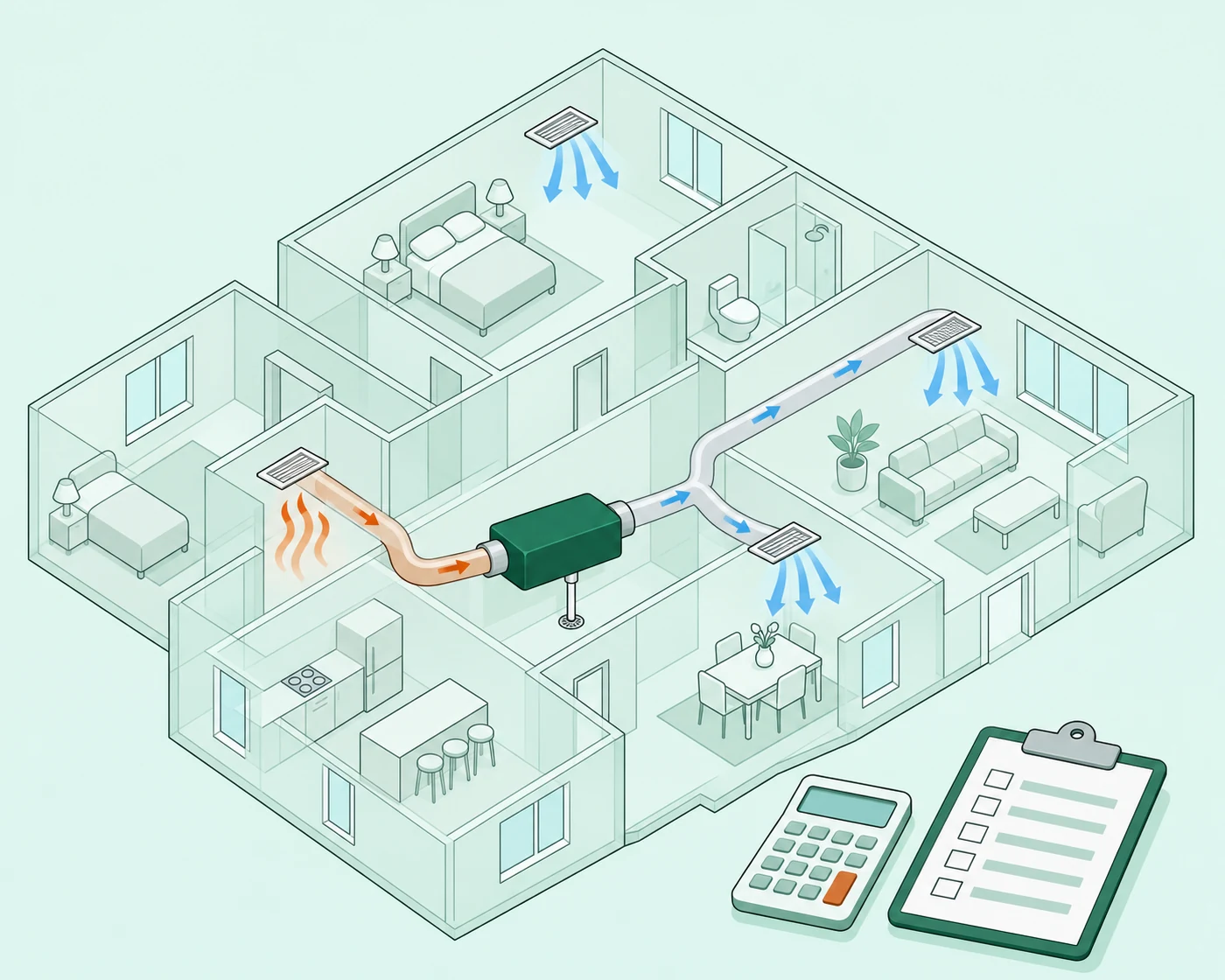
Size by moisture load, not floor area
Volume, glazing, door traffic, occupancy and fresh-air supply give the litres per day each zone needs. The result is the number of units, their capacity and where each one goes. Capacity figures come from the manufacturer datasheet.
- 03
Install, commission, hand over
Units above the ceiling, dedicated return and supply ducts, a plumbed condensate drain, grilles and the controller. Setpoints are set with you and a readings report closes the job. Installation time is confirmed on the survey.
Projects in this space
Every installation is documented with dated humidity readings, photos and the owner's consent. Nothing is published before it is real; the first case studies are being written.
Villa questions
How many units does a villa need?
Usually one per floor or zone, but the number follows the moisture load, not the number of bedrooms. A sealed upper floor may share one unit while a ground floor with a kitchen, majlis and garden doors needs its own. The survey decides.
Can it go into an existing villa?
Yes. The unit sits above an existing false ceiling, usually in a corridor or bathroom, with an access panel. Ducts run in the void to grilles in each room. We check void depth and drain routes on the survey before anything is quoted.
Does it connect to my AC ducts?
No. The dehumidifier has its own return and supply ducts and is never connected into the AC ductwork. The AC keeps controlling temperature; the dehumidifier controls humidity. Two systems, two jobs.
Does it keep working while we are abroad for the summer?
Yes. It runs on its own humidistat and drains to a pipe, so there is no tank to empty. Leave the AC fan on as the technicians advise and set the humidity target before you go; the villa does not get the chance to go mouldy.
Will we hear it in the bedrooms?
The unit sits in the ceiling void, not in the room, so what you hear is air moving at the grille. The sound level at the grille is a datasheet figure we publish once the sheet is in hand.
Related guides
Guides
What size dehumidifier do you need?
Sizing by moisture load, not floor area: a table by property type, ceiling height, occupancy and wet rooms, and the steps to work out litres a day.
Read the guideGuides
Ducted vs portable dehumidifier
A 20 L portable fills its tank in a day in August and treats one room. What portables do, what a ducted system does, and the break-even.
Read the guideGuides
Back from holiday to a mouldy home
Six weeks with the AC off can leave every surface mouldy. What to do in the first 24 hours, what to throw out, which AC setting to leave on, the fix.
Read the guide
Talk to an engineer, not a call centre.
Send a photo of the problem and a floor plan on WhatsApp. An engineer replies with the next step, not a script.
- An engineer answers, not a sales desk
- Site survey before any quote
- Installation and service across the UAE
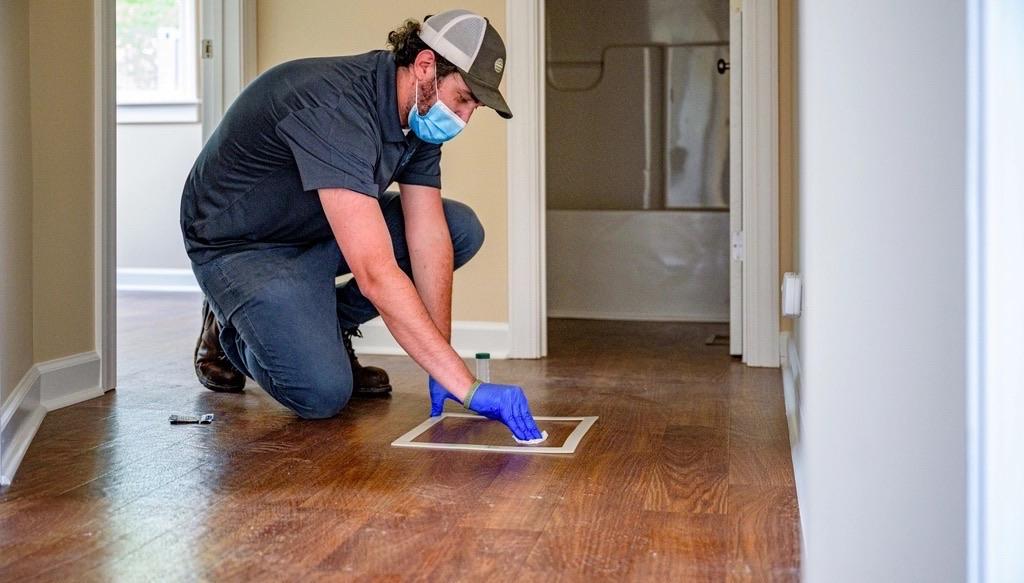
Tell us the space. We size it and quote it.
A floor plan or a few photos on WhatsApp are enough to start. A survey confirms the rest.