Spaces
Dehumidification for warehouses and storage
A warehouse holds humidity in its volume: a dock door open for ten minutes lets in more moisture than a small unit removes in a day. High-capacity ducted units sized by volume, door openings and the goods stored hold archives, coffee, paper, leather, pharmaceuticals and electronics at a set humidity, continuously, with logged readings.
Site survey · sizing · installation · maintenance, UAE-wide

What you are seeing
Rust on racking, corrosion on metal stock
Steel surfaces cooler than the air collect condensation overnight. Fixings, tools and machined parts show it first.
Cartons soften, labels peel, paper curls
Packaging absorbs moisture from the air and loses strength. Archive boxes and printed stock are the usual casualties.
Mould on leather, coffee, textiles and timber
Organic goods carry their own moisture and feed mould above about 60 % RH. A coffee store is a textbook case.
Why it happens
A warehouse is a large volume with large doors and often no air conditioning. Every dock opening exchanges air with the outside, and in the UAE summer that air is close to saturation. The roof heats the air by day; at night the steel and the stock cool below the dew point and condensation forms.
Floor area says little about the load; volume, door schedule and the goods stored say everything. A dry store for coffee or paper needs a different setpoint from a general store.
High-capacity ducted units in continuous operation, with alarms and logged readings, hold the zones you define at the humidity the goods need.
What changes with a ducted system
Setpoint by zone: dry store, archive, loading area.
Continuous operation with alarms and logged readings for audits.
Sized by moisture load and door schedule, not floor area.
Which system fits
Each pick is a product family, not a model. The survey decides the capacity and the number of units; nothing is sized by floor area alone.
Typical system
Series H: high-capacity ducted dehumidifier
For large volumes and heavy moisture loads: warehouses, pool halls, hotel back-of-house and showrooms.
Volume and door traffic call for capacity. High-capacity units, ducted or free-blowing into the space, hold the warehouse or its dry store continuously.
- Mezzanine, plant room or high-level mounting
- Sized by volume, door schedule and the stored goods
- Alarms and Modbus readout; readings logged
Typical system
Series T: ducted fresh-air treatment unit
Treats the fresh air before it reaches the rooms: filters it, dries it and exhausts the stale air.
Where a dock or a ventilation inlet brings in most of the moisture, the treatment unit dries that air before it enters the store.
- Fits the make-up air path
- Reduces the load on the main units
- Specified with the warehouse ventilation
How we fix it, in order
- 01
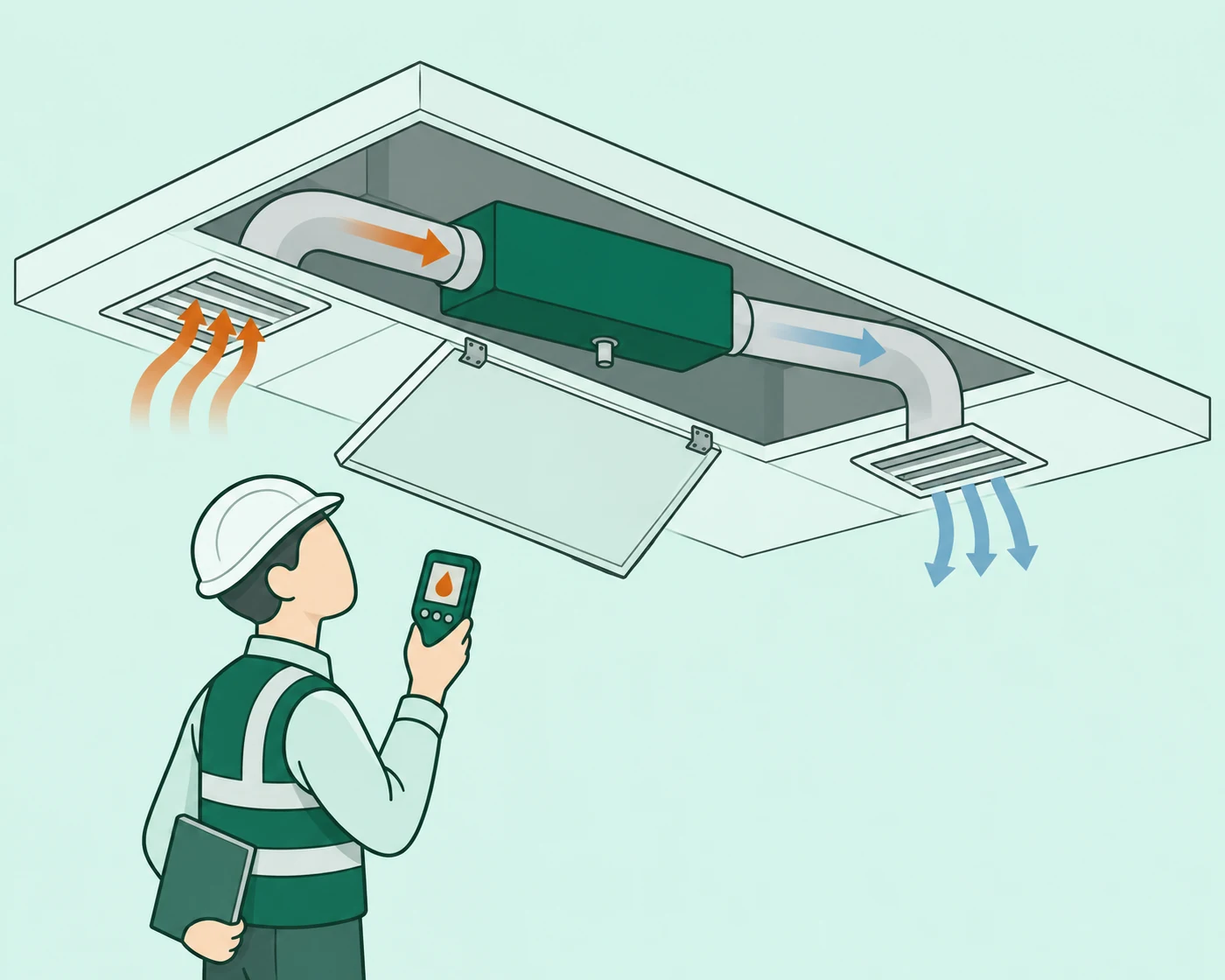
Survey the store
Volume, door schedule, goods and their target humidity, existing cooling or ventilation, power and drain. Readings at the racking, at the doors and at roof level.
- 02
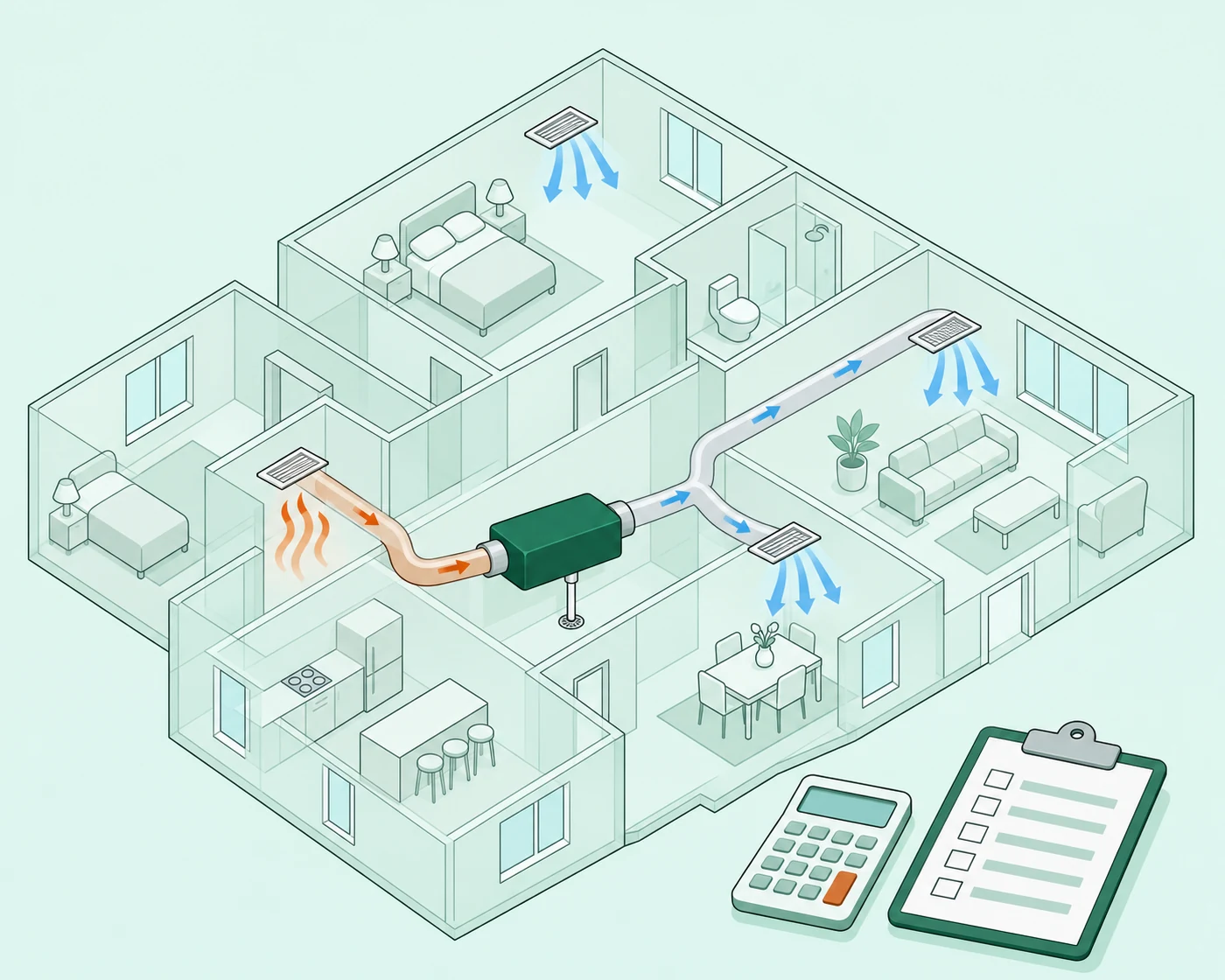
Size for the volume and the doors
The moisture load from door openings, infiltration and the goods themselves gives the litres per day per zone. Capacities are datasheet figures.
- 03
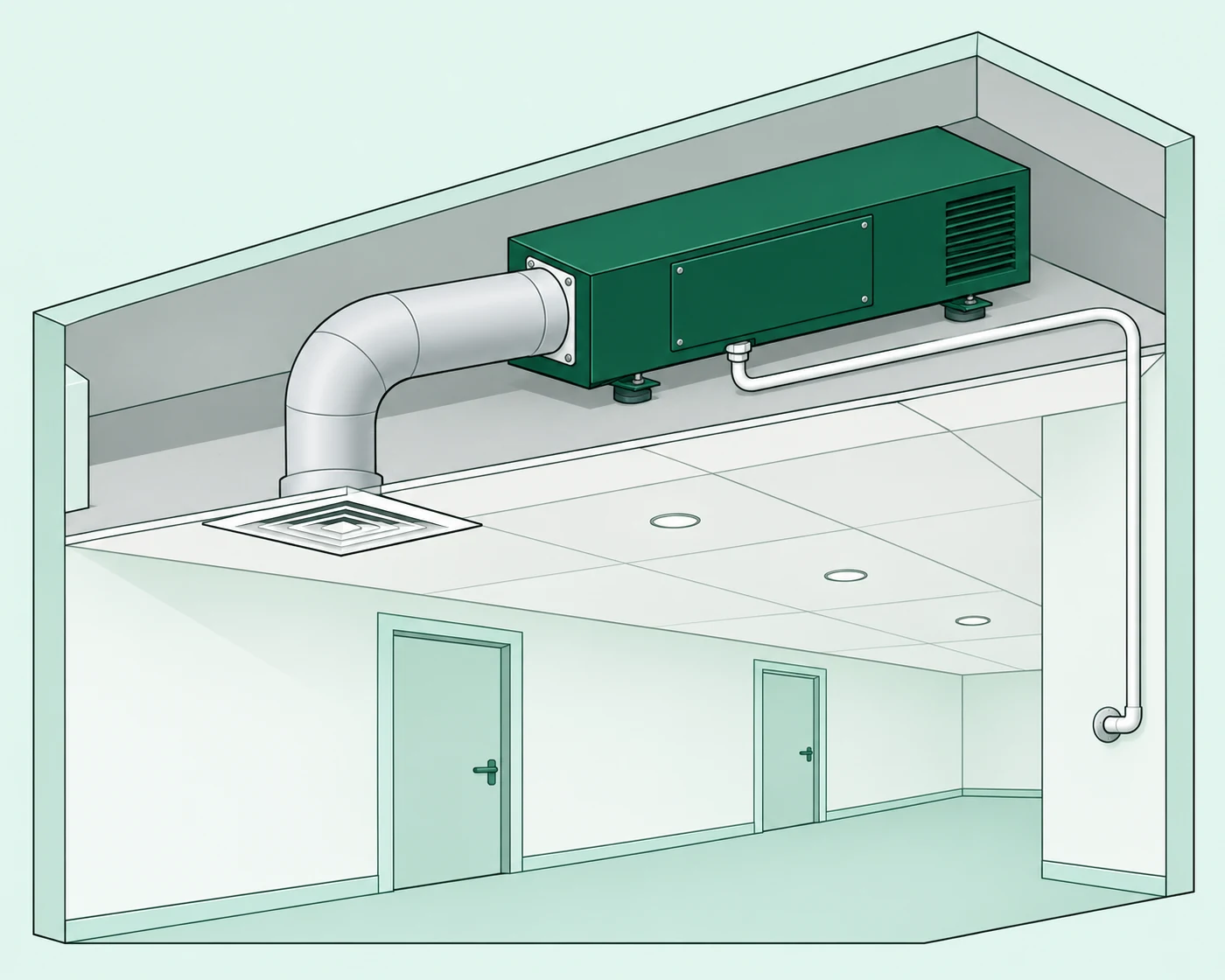
Install, commission with logging, hand over
Units at high level or in a plant room, duct runs where needed, drain, alarms and logging. Handover includes the setpoints and a readings report for your quality records.
Projects in this space
Every installation is documented with dated humidity readings, photos and the owner's consent. Nothing is published before it is real; the first case studies are being written.
Warehouse and storage questions
Which goods need humidity control?
Anything that absorbs moisture or corrodes: coffee, paper and archives, leather, textiles, timber, pharmaceuticals, electronics, machined metal and packaging. The target humidity differs by product; the survey records it per zone.
Does it work in a warehouse without air conditioning?
Yes. Dehumidification does not depend on cooling. The units are selected for the warehouse's temperature range; the operating range is a datasheet figure we publish once confirmed.
How is a warehouse dehumidifier sized?
From volume, the door schedule, infiltration, the goods stored and the target humidity. Floor area alone gives the wrong answer, usually too small.
Can we log the readings for audits?
Yes. The controllers expose humidity and alarms over Modbus for your logging or BMS, and we provide a readings report at commissioning.
Related guides
Guides
What size dehumidifier do you need?
Sizing by moisture load, not floor area: a table by property type, ceiling height, occupancy and wet rooms, and the steps to work out litres a day.
Read the guideGuides
What a dehumidifier costs to run in the UAE
Kilowatts, hours and the DEWA tariff (about AED 0.30 per kWh with surcharge and VAT) turned into a monthly figure for portable and ducted units.
Read the guideGuides
Drying out after water damage
After a pipe burst or AC leak, walls and floors hold water for weeks. Drying order, how much water a wet villa releases, rental vs installed units.
Read the guide
Talk to an engineer, not a call centre.
Send a photo of the problem and a floor plan on WhatsApp. An engineer replies with the next step, not a script.
- An engineer answers, not a sales desk
- Site survey before any quote
- Installation and service across the UAE
Tell us the space. We size it and quote it.
A floor plan or a few photos on WhatsApp are enough to start. A survey confirms the rest.