Spaces
Humidity control for apartments and penthouses
Sealed double-glazed towers keep the heat out and the moisture in. Showers, laundry, cooking and the AC's own supply air push rooms past 60 % RH. A concealed ducted dehumidifier in the ceiling void holds the apartment at about 50 % RH, with no tank and nothing on the floor.
Site survey · sizing · installation · maintenance, UAE-wide

What you are seeing
Water on the windows in the morning
Condensation on the inside of double glazing and on the AC diffusers is the clearest sign the room sat above its dew point overnight.
Mould behind the wardrobe and on shoes
Closed cupboards against an external wall are the first place it shows: white bloom on leather, spots on clothes, a smell that washing does not remove.
The AC supply air itself feels damp
In one Dubai apartment inspection the air at the AC supply vent measured 88.5 % RH; the sitting room sat over 64 % and the bedroom near 70 %. The AC was adding moisture, not removing it.
Why it happens
A sealed high-rise unit has almost no natural ventilation, so moisture from showers, cooking and laundry stays indoors. The volume is small, so humidity swings quickly: one long shower lifts the whole flat.
The fan-coil unit cools until the thermostat is satisfied and then cycles off. On mild days it runs so little that it removes almost nothing. Where the building supplies untreated fresh air, that air arrives humid too.
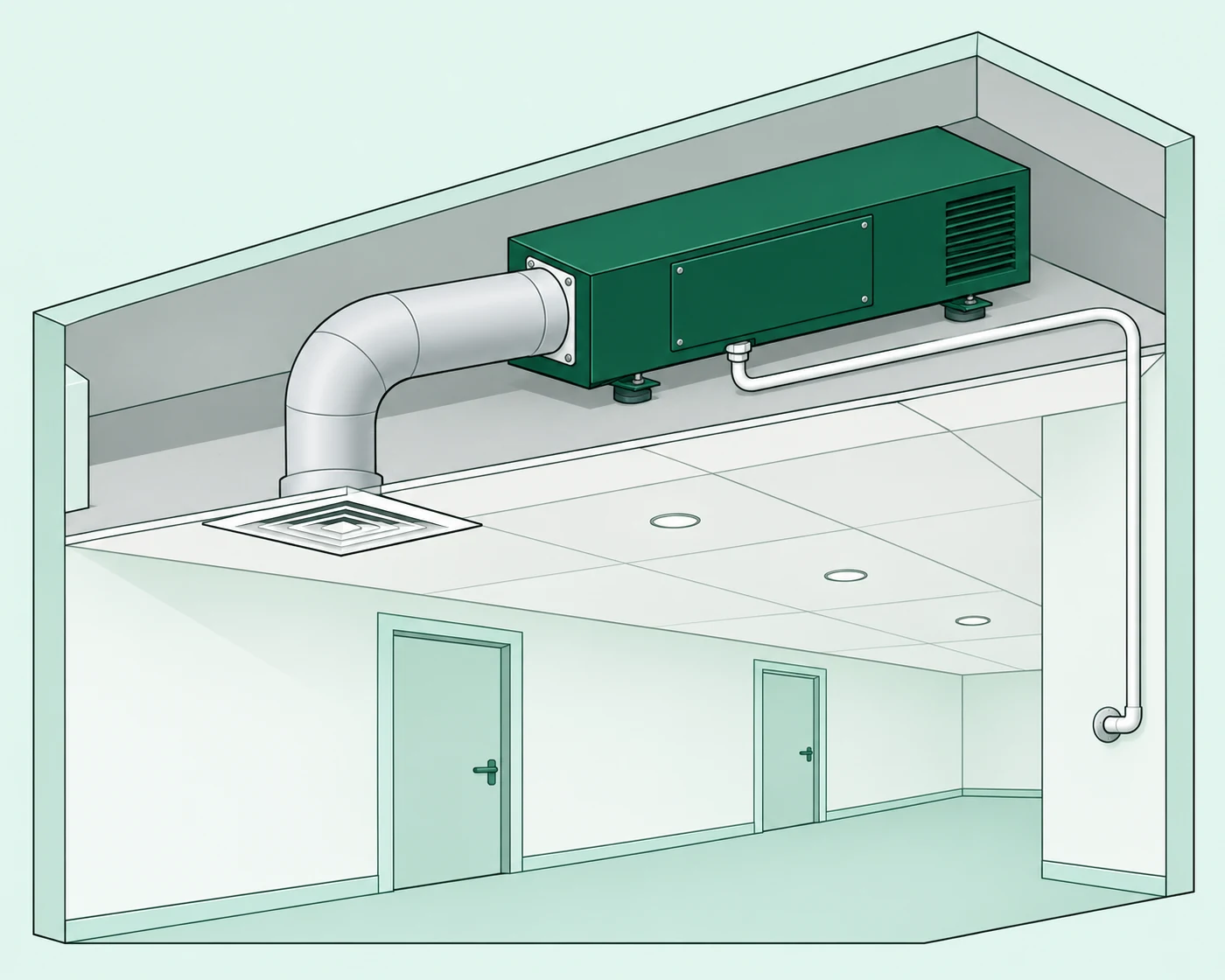
A compact ducted unit in the corridor or bathroom ceiling void returns air from the rooms, dries and filters it and supplies it back. It runs on its own humidistat whatever the AC is doing, and drains to the condensate line.
What changes with a ducted system
About 50 % RH held in every room from one wall controller.
No portable unit, no tank, nothing to carry to the sink.
Spores, dust and odours filtered on every pass.
Renting? What to ask your landlord
Tenants cannot usually install building works, but a survey report with room-by-room readings is strong evidence. Owners in reported cases have agreed to install a dehumidifier once the readings were on paper. Our guide explains who pays for what and how the dispute route works.
Landlord or tenant: who pays for humidity damage?Which system fits
Each pick is a product family, not a model. The survey decides the capacity and the number of units; nothing is sized by floor area alone.
Typical system
Series R: recirculating ducted dehumidifier
Dries the air already in the building and returns it through its own ducts. The usual choice for villas, apartments, offices and basements.
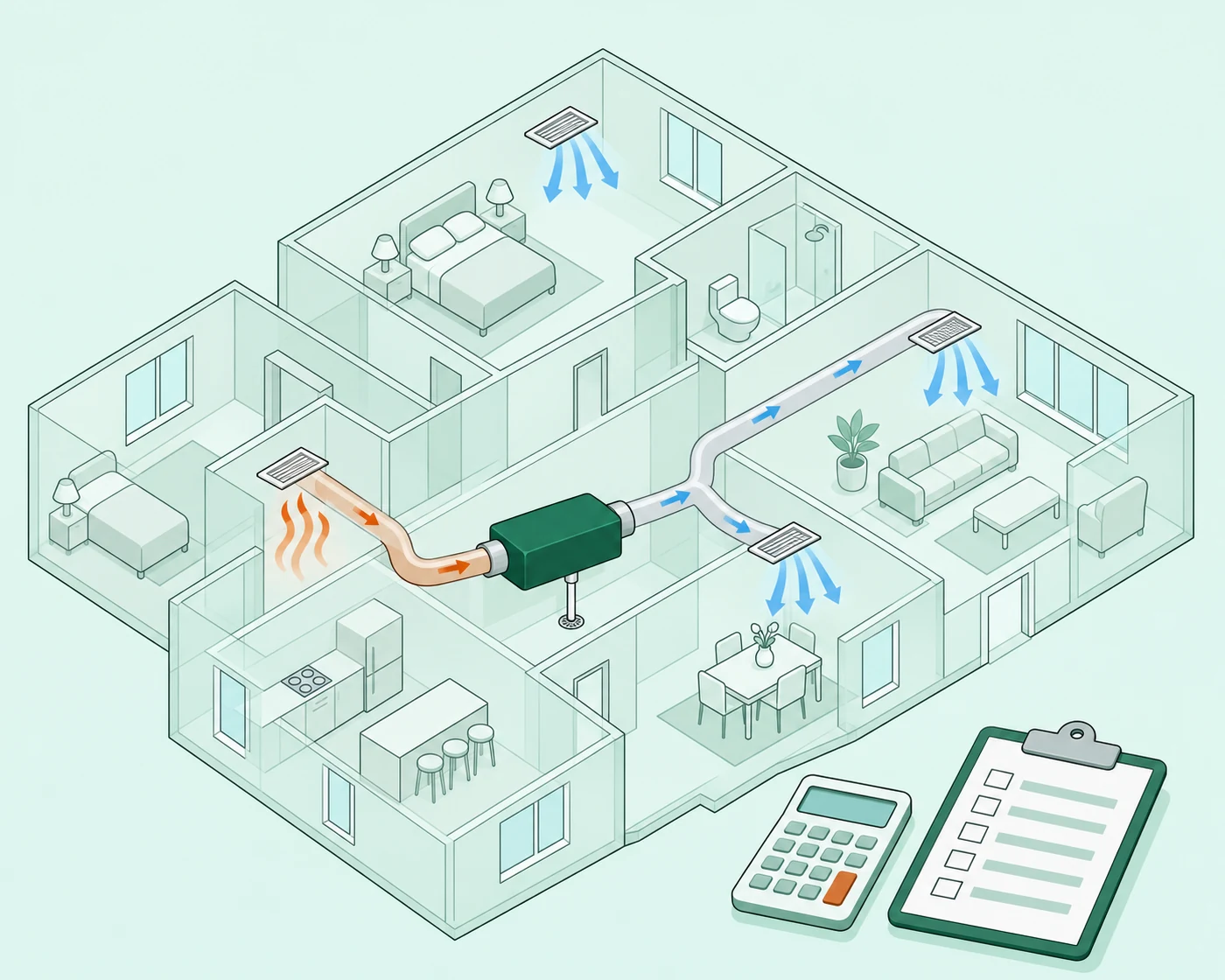
One compact recirculating unit usually covers an apartment. It sits above the corridor or bathroom ceiling and serves the bedrooms and living room through short ducts.
- Needs a ceiling void with an access panel and a route to the AC condensate drain
- Grilles in the ceiling; the wall controller sits with the AC thermostat
- Penthouses on two levels usually take one unit per level
Typical system
Series T: ducted fresh-air treatment unit
Treats the fresh air before it reaches the rooms: filters it, dries it and exhausts the stale air.
Where the building supplies untreated fresh air to the flat, the fresh-air treatment unit dries and filters it before it reaches the rooms, so the supply is no longer the moisture source.
- Fits in the fresh-air path above the ceiling
- Removes the humid supply-air problem at its source
- Combined with Series R where the flat also needs recirculation
How we fix it, in order
- 01
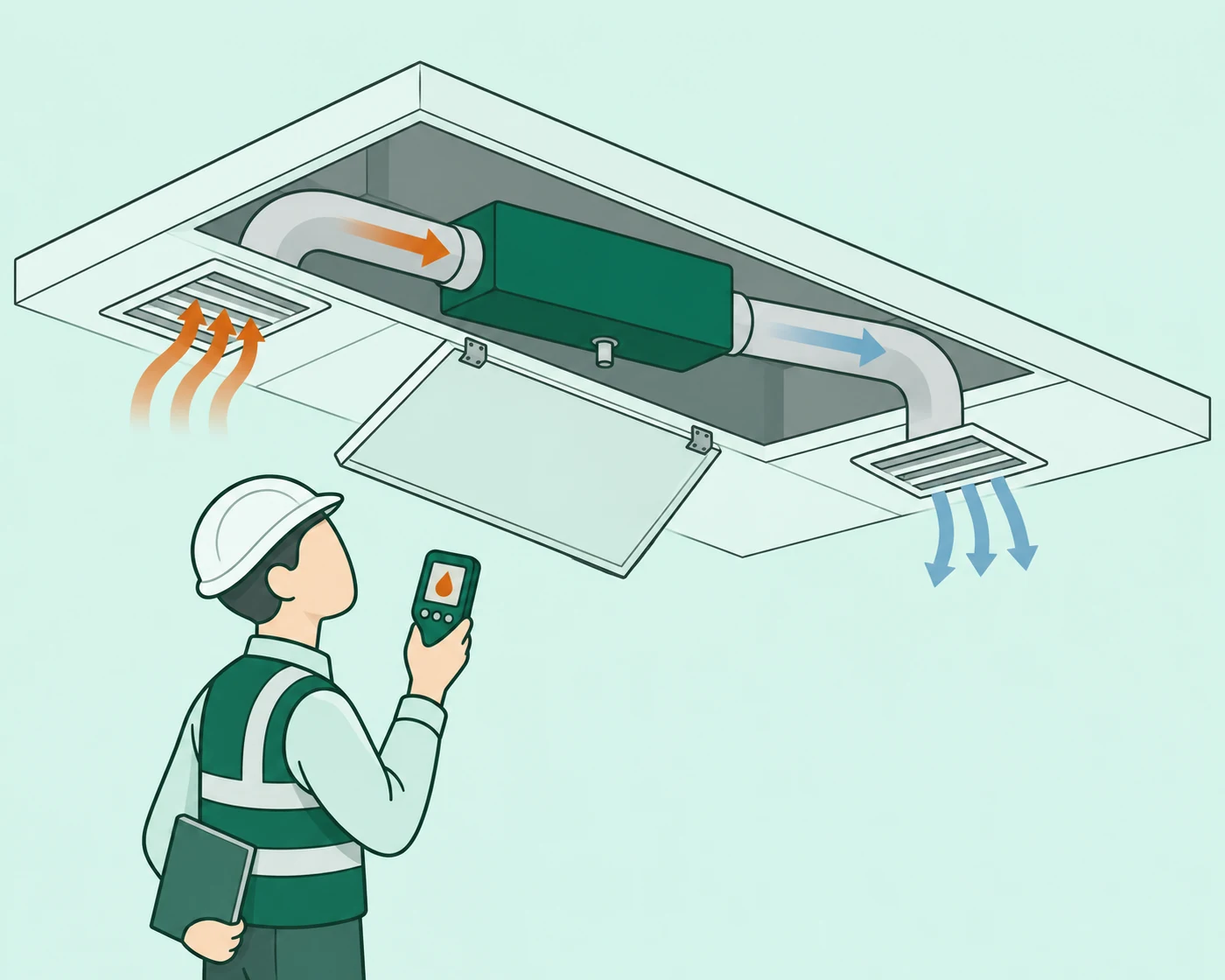
Survey the apartment
Readings in each room and inside the wardrobes, at the AC supply vent and at the fresh-air inlet. We measure the ceiling void, find the condensate line and check the building's rules for works above the ceiling.
- 02
Size for the flat, not the floor plan
Volume, glazing, occupancy, bathrooms and the fresh-air supply set the moisture load. Most apartments take one unit; a penthouse with two levels or a large terrace door usually takes two. Capacity is a datasheet figure.
- 03
Install above the ceiling, commission, hand over
Unit, ducts, grilles and the drain connection go in above the ceiling; the controller goes on the wall. Setpoints are set with you and a readings report closes the job.
Projects in this space
Every installation is documented with dated humidity readings, photos and the owner's consent. Nothing is published before it is real; the first case studies are being written.
Apartment and penthouse questions
Is there room in an apartment ceiling?
Usually yes, in the corridor or bathroom void where the fan coil already sits. We measure the void on the survey; if it is too shallow, a compact unit or a different position is proposed. Nothing is quoted before the void is measured.
Where does the water go?
To the AC condensate line or a floor drain, through a permanent pipe. There is no tank, so nothing needs emptying and the unit keeps working while you travel.
Will the neighbours or I hear it?
The unit sits in the ceiling void and is isolated from the slab; in the room you hear air at the grille. The sound level at the grille is a datasheet figure, published once the sheet is in hand.
Can a tenant have it installed?
Only with the owner's agreement, since it is a fixed installation. Our survey report gives the readings the owner needs to decide. In reported Dubai cases, landlords agreed to install a dehumidifier once the humidity was documented.
What about a penthouse on two floors with a terrace?
Each level usually gets its own unit, sized for its glazing and terrace doors. The two run from one controller or one each, as you prefer.
Related guides
Guides
Why your house is humid even with the AC on
Oversized AC that short-cycles, supply air at 88% RH, sealed glazing and night-time humidity. Eight UAE causes, how to measure, the fix that holds 50% RH.
Read the guideGuides
Mould in the wardrobe: causes and the fix
Closed wardrobes in humid flats sit above 65% RH, so cotton, leather and shoes grow mould. How to clean them, what to throw out, how to stay under 55%.
Read the guideGuides
Who pays for humidity and mould damage: landlord or tenant?
What Dubai tenancy practice says about maintenance, what an inspection report should show, how the Rental Dispute Centre works, what to ask the owner.
Read the guide
Talk to an engineer, not a call centre.
Send a photo of the problem and a floor plan on WhatsApp. An engineer replies with the next step, not a script.
- An engineer answers, not a sales desk
- Site survey before any quote
- Installation and service across the UAE
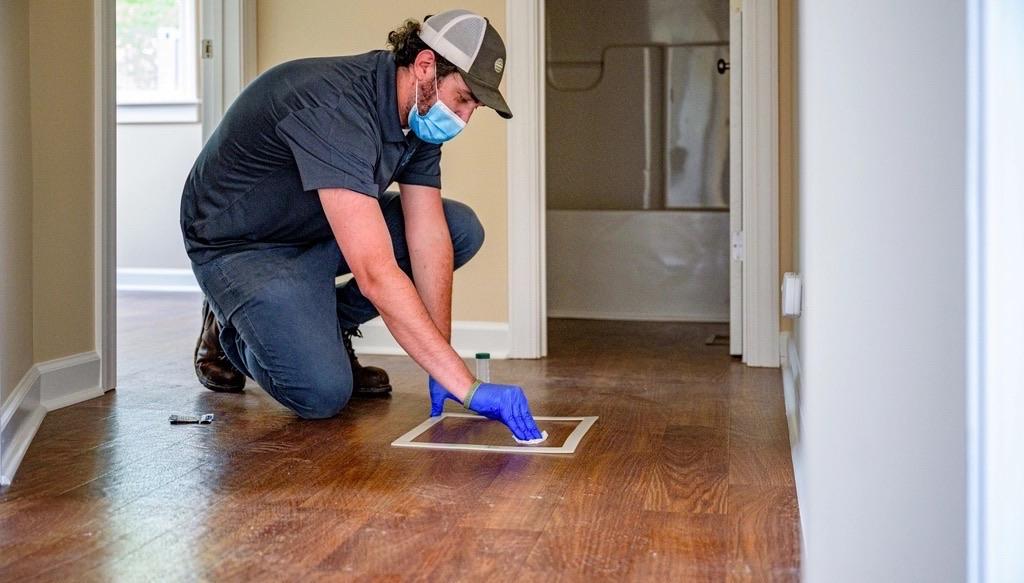
Tell us the space. We size it and quote it.
A floor plan or a few photos on WhatsApp are enough to start. A survey confirms the rest.