Spaces
Humidity control for offices and workspaces
An open-plan office runs the AC hard and still feels clammy by mid-afternoon: people, fresh air and door traffic add moisture faster than a cooling coil removes it. Concealed ducted dehumidification and filtration above the false ceiling hold a set humidity for staff, paper and equipment, with no floor units and no tanks.
Site survey · sizing · installation · maintenance, UAE-wide

What you are seeing
Sticky air by three in the afternoon, AC on
The thermostat is satisfied, the coil cycles off, and the humidity from a full floor of people keeps climbing.
Paper curls, labels lift, cables sweat
Print rooms, archives and server cupboards show it first. Condensation inside cold equipment is the expensive version.
Complaints: musty meeting rooms, allergies, headaches
Closed meeting rooms and the rooms left in eco mode over the weekend hold the smell and the spores.
Why it happens
Each person adds moisture to the air, and the fresh air brought in for them arrives humid in summer. The AC is controlled on temperature, so once the floor is cool the coil cycles off and stops removing water, whatever the humidity is.
Weekends make it worse: the system idles, humidity climbs, and Monday starts musty. Portable units are not an option across a floor plate, and nobody wants one humming next to a desk.
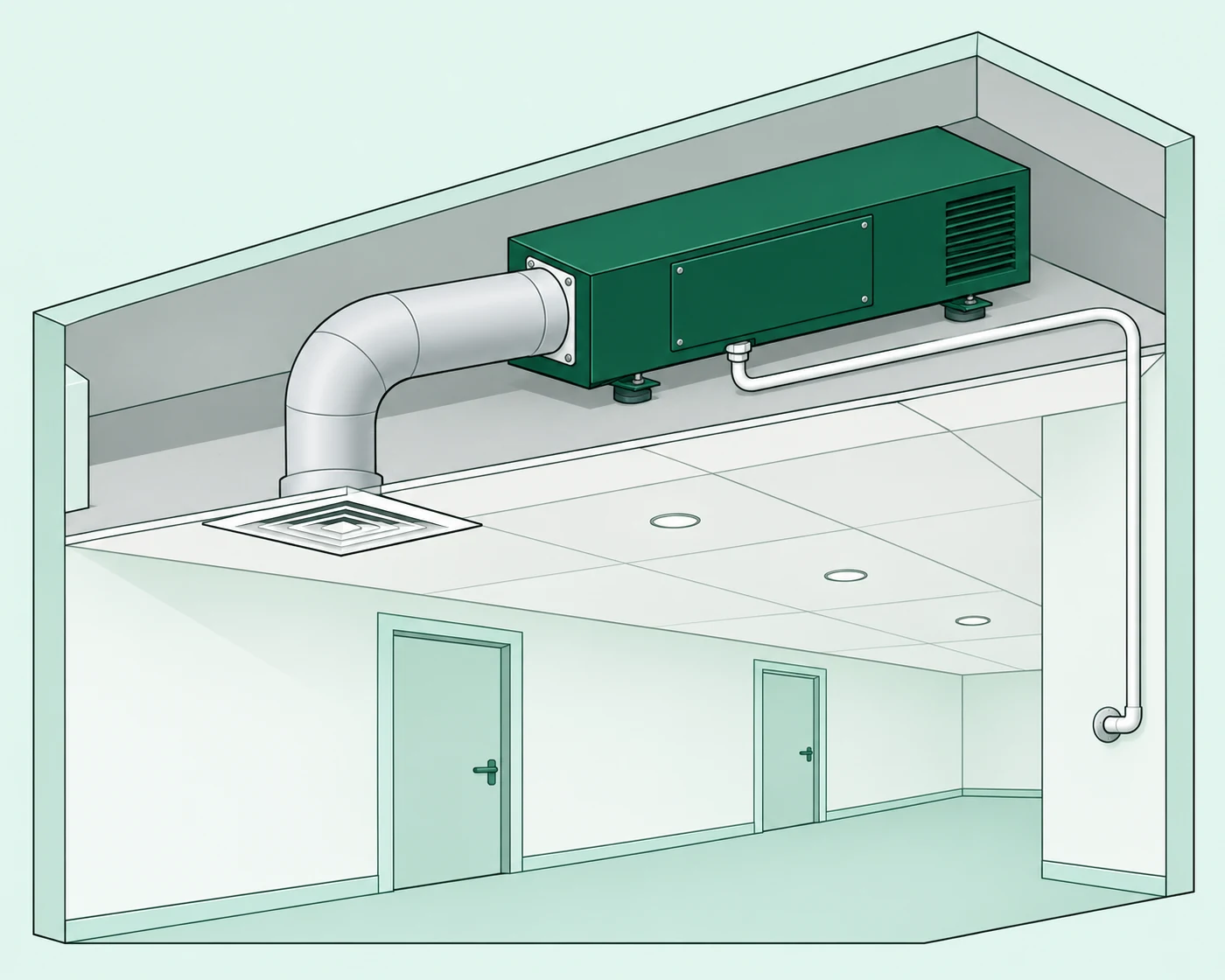
A ducted unit above the false ceiling returns air from the floor, dries and filters it and supplies it back through its own grilles. Where the fresh air is the main source, a treatment unit dries it before the fan coils ever see it.
What changes with a ducted system
One humidity setpoint across the floor plate, held through the weekend.
Filtered air on every pass: pre-filter, fine stage and carbon.
Installed above the existing false ceiling, outside working hours.
Which system fits
Each pick is a product family, not a model. The survey decides the capacity and the number of units; nothing is sized by floor area alone.
Typical system
Series R: recirculating ducted dehumidifier
Dries the air already in the building and returns it through its own ducts. The usual choice for villas, apartments, offices and basements.
For most offices the air already on the floor needs drying and filtering. A recirculating unit in the ceiling void serves the floor plate through short duct runs to its own grilles.
- Sits in the corridor or core void with an access panel
- Drains to the AC condensate line
- Controller with the FM team; readings on request
Typical system
Series T: ducted fresh-air treatment unit
Treats the fresh air before it reaches the rooms: filters it, dries it and exhausts the stale air.
Where the fresh-air supply is the main moisture source, the treatment unit dries and filters it at the intake so the fan coils receive dry air.
- Fits the fresh-air path at the intake or riser
- Reduces the load on the existing AC
- Combined with Series R on dense floors
Typical system
Series F: fresh-air dehumidifier with heat recovery
Brings in filtered outdoor air, dries it and recovers energy from the exhaust. For buildings that need a fresh-air supply as well as humidity control.
A fit-out that also needs its fresh-air supply rebuilt takes the fresh-air dehumidifier with heat recovery: filtered outdoor air, dried, with the energy recovered from the exhaust.
- Replaces the fresh-air unit in a refurbishment
- Suits floors without a central AHU
- One unit per floor or tenancy
How we fix it, in order
- 01
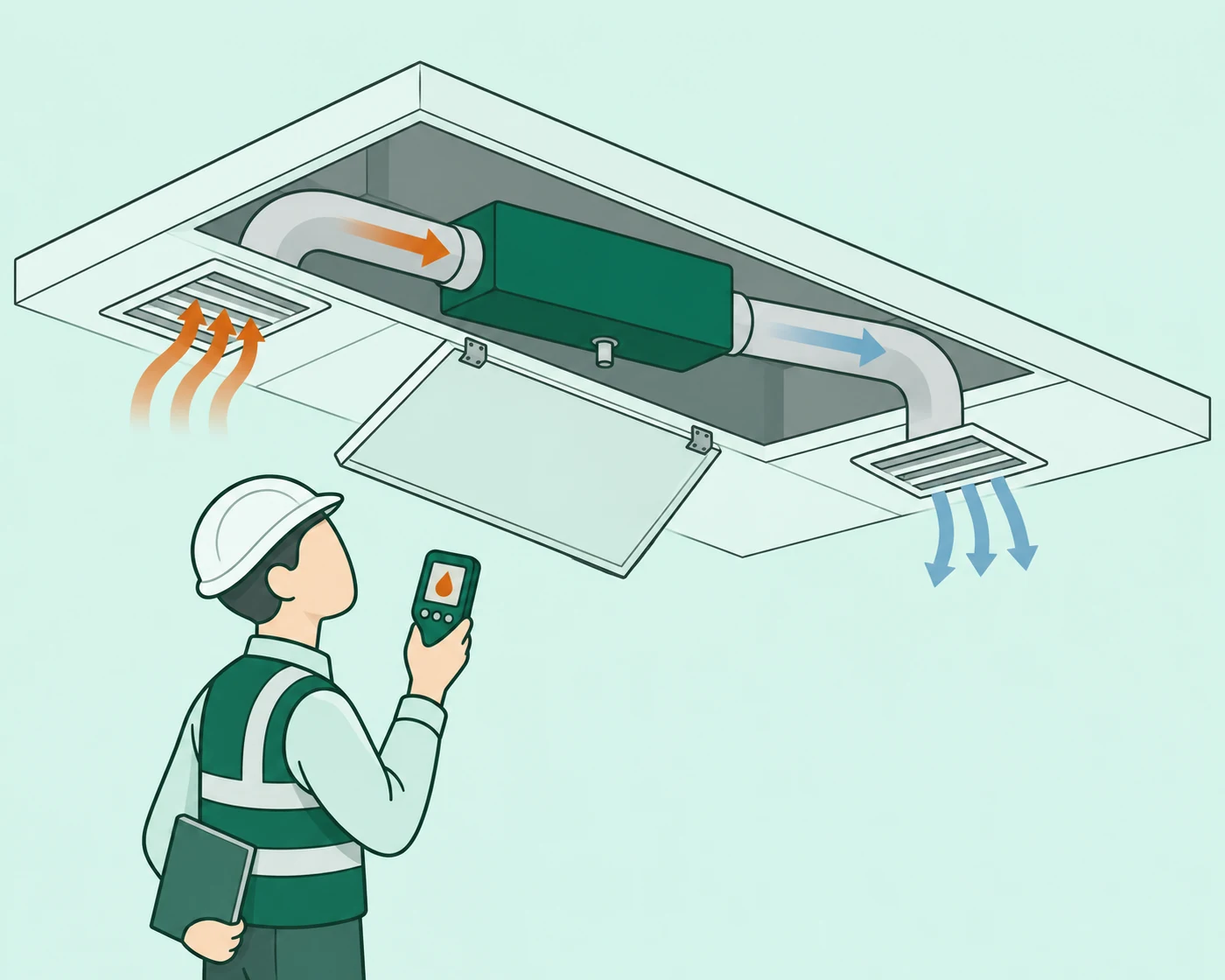
Survey with the facility manager
Readings through the working day, peak occupancy, door counts, fresh-air intake, ceiling void, drain and power. We note print rooms, archives and server cupboards separately.
- 02
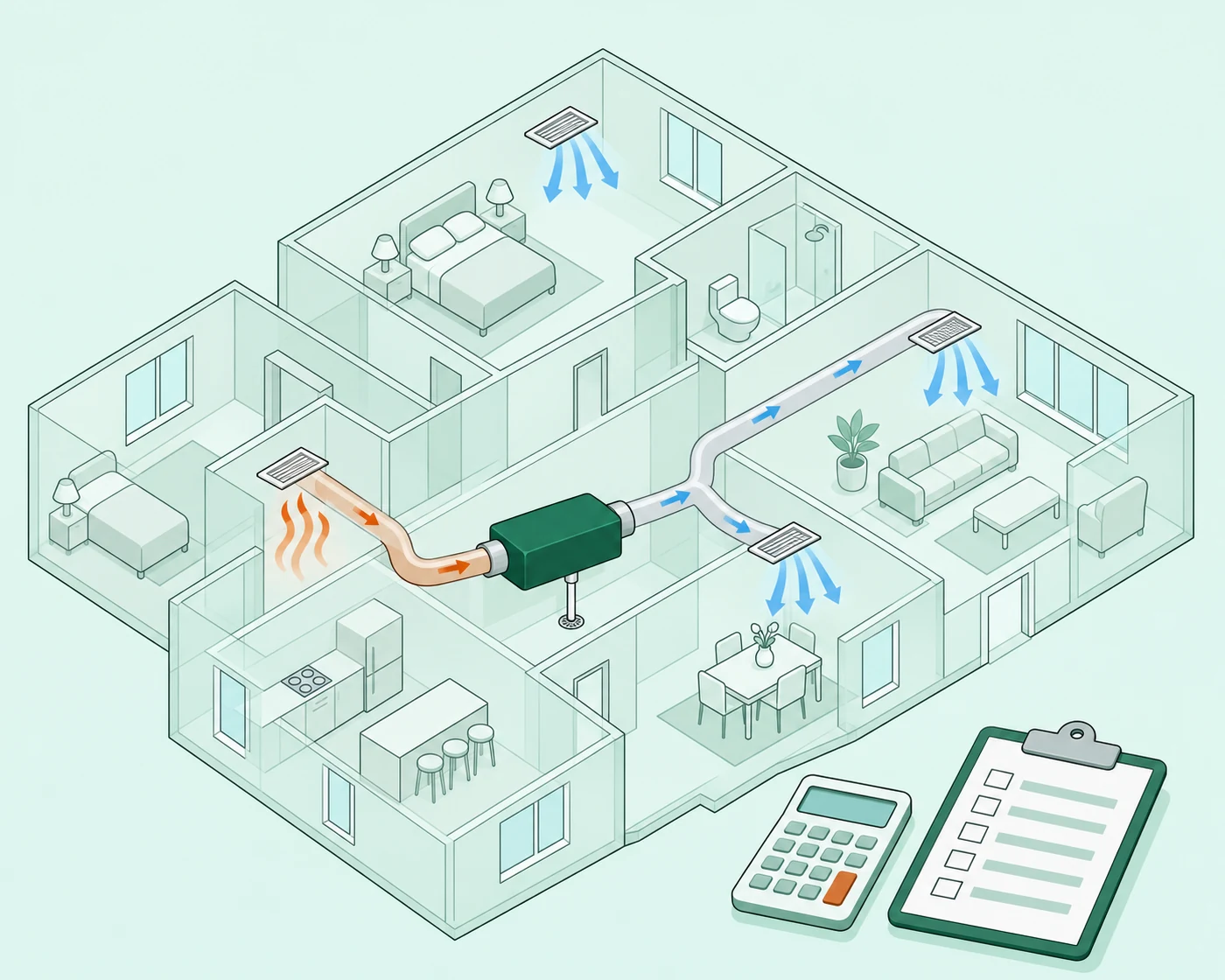
Size for people and fresh air
Occupancy, fresh-air rate, glazing and door traffic set the load. Capacities are datasheet figures.
- 03
Install at night or over a weekend, hand over to FM
Unit, ducts, grilles, drain and controller above the ceiling, outside working hours. The FM team receives the setpoints, the readings report and the maintenance schedule.
Projects in this space
Every installation is documented with dated humidity readings, photos and the owner's consent. Nothing is published before it is real; the first case studies are being written.
Office questions
Will the installation disturb the office?
The work is above the false ceiling and is scheduled outside working hours or over a weekend. Tiles go back, grilles are the only visible change.
Can it use the office's AC ducts?
No. The dehumidifier has its own return and supply ducts and never connects into the AC ductwork. The AC keeps the temperature; the dehumidifier keeps the humidity.
Does it help indoor air quality as well?
Yes. Every pass through the unit goes through a washable pre-filter, a fine filter stage and activated carbon, so dust, spores and odours drop along with the humidity. Filter grades are published once the datasheet confirms them.
What does the facility manager get?
Setpoints agreed at commissioning, a readings report, alarm thresholds and a maintenance schedule for filters and drains. Modbus readout to the BMS where the building has one.
Related guides
Guides
Indoor air quality in Dubai homes
What a Dubai IAQ test measures, thresholds for RH, PM2.5, CO2 and VOCs, why humidity drives most of it, and what a filtering ducted dehumidifier changes.
Read the guideGuides
ASHRAE fresh air requirements, in plain terms
ASHRAE 62.1 and 62.2 ventilation rates per person and per square metre, how they apply in the UAE, and why undried outdoor air brought in causes mould.
Read the guideGuides
What a dehumidifier costs to run in the UAE
Kilowatts, hours and the DEWA tariff (about AED 0.30 per kWh with surcharge and VAT) turned into a monthly figure for portable and ducted units.
Read the guide
Talk to an engineer, not a call centre.
Send a photo of the problem and a floor plan on WhatsApp. An engineer replies with the next step, not a script.
- An engineer answers, not a sales desk
- Site survey before any quote
- Installation and service across the UAE
Tell us the space. We size it and quote it.
A floor plan or a few photos on WhatsApp are enough to start. A survey confirms the rest.