Problems
Mould and condensation: fix the humidity, not just the stain
Mould grows back after cleaning for one reason: the humidity that fed it is still there. Above about 60 % RH, gypsum, grout, wood and fabric stay damp enough for spores to grow. Remediation removes what has grown; a concealed ducted dehumidifier holds the home at about 50 % RH so it does not return.
Site survey · sizing · installation · maintenance, UAE-wide

What you are seeing
Black spots return weeks after cleaning
Cleaning removes the growth, not the cause. On gypsum and grout it comes back as long as the surface stays damp.
Water on windows and AC diffusers in the morning
The room sat above its dew point overnight. The same moisture is in the wall behind the wardrobe.
A musty smell you can no longer find the source of
Growth inside the AC duct, behind furniture or in the ceiling void. Residents returning from summer holidays describe exactly this.
Why it happens
Mould needs a damp surface. Indoors that comes from humid air meeting a cool surface: glass, a diffuser, an external wall behind a wardrobe, the inside of an AC duct. Gulf News quotes 60 % RH as the level where moisture problems quietly begin, and UAE homes sit above it overnight through the summer.
Dubai clinics and remediation firms reported a jump in mould enquiries over the 2024 summer, many from residents who switched the AC off for a holiday. DIY will not fix mould on gypsum; the board has to be cut out. Then it comes back if the humidity is unchanged.
We do not remove mould. We fix the humidity that brings it back, and we filter the spores out of the air on every pass through the system.
What changes with a ducted system
Remediation first, then humidity control: the honest order.
The home held below the humidity mould needs to grow.
Spores filtered from the air on every pass.
We fix the cause, not the stain
Existing mould is removed by a remediation contractor, and gypsum that has grown mould is replaced. We can recommend firms and we coordinate the timing so the system is running when the new board goes in.
Mould removal in Dubai: cost, method and why it comes backWhich system fits
Each pick is a product family, not a model. The survey decides the capacity and the number of units; nothing is sized by floor area alone.
Typical system
Series R: recirculating ducted dehumidifier
Dries the air already in the building and returns it through its own ducts. The usual choice for villas, apartments, offices and basements.
Recurring mould is a whole-home humidity problem. A recirculating unit per zone holds the air below the level mould needs and filters the spores on every pass.
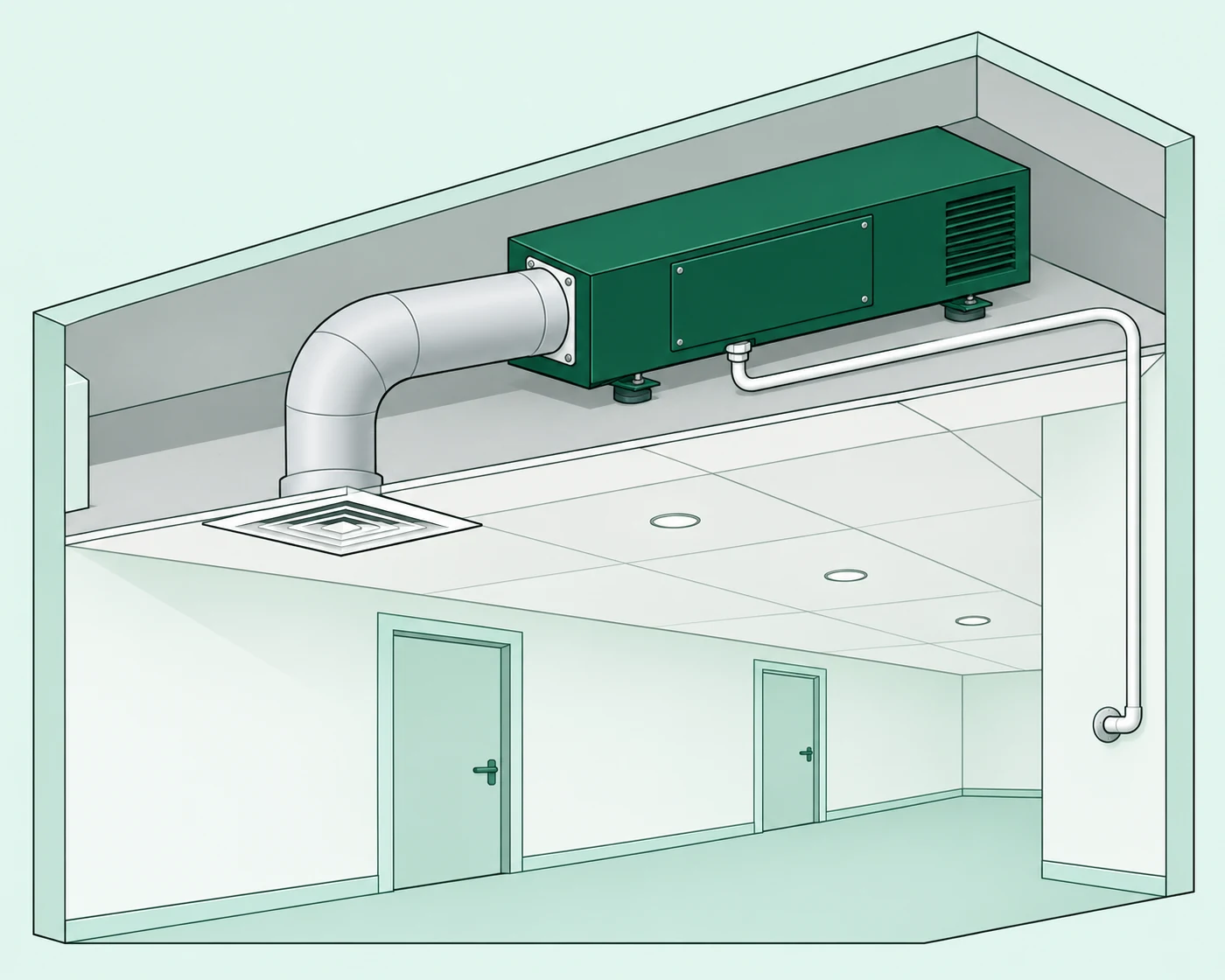
- Ceiling void of a corridor or bathroom
- Dedicated ducts to the rooms where it showed and the ones where it has not yet
- Permanent drain; runs while you are away
Typical system
Series T: ducted fresh-air treatment unit
Treats the fresh air before it reaches the rooms: filters it, dries it and exhausts the stale air.
Where the fresh-air supply or the AC's own intake is the moisture source, the treatment unit dries and filters that air before it reaches the rooms.
- Fits the fresh-air path above the ceiling
- Stops humid supply air feeding the growth
- Combined with Series R where needed
How we fix it, in order
The order matters: remove, then measure, then hold. Installing before remediation seals the problem in.
- 01
Remediation by a specialist
A remediation contractor removes the growth and replaces affected gypsum. We are not that contractor; we can recommend one and we coordinate the timing with them.
- 02
Survey and readings
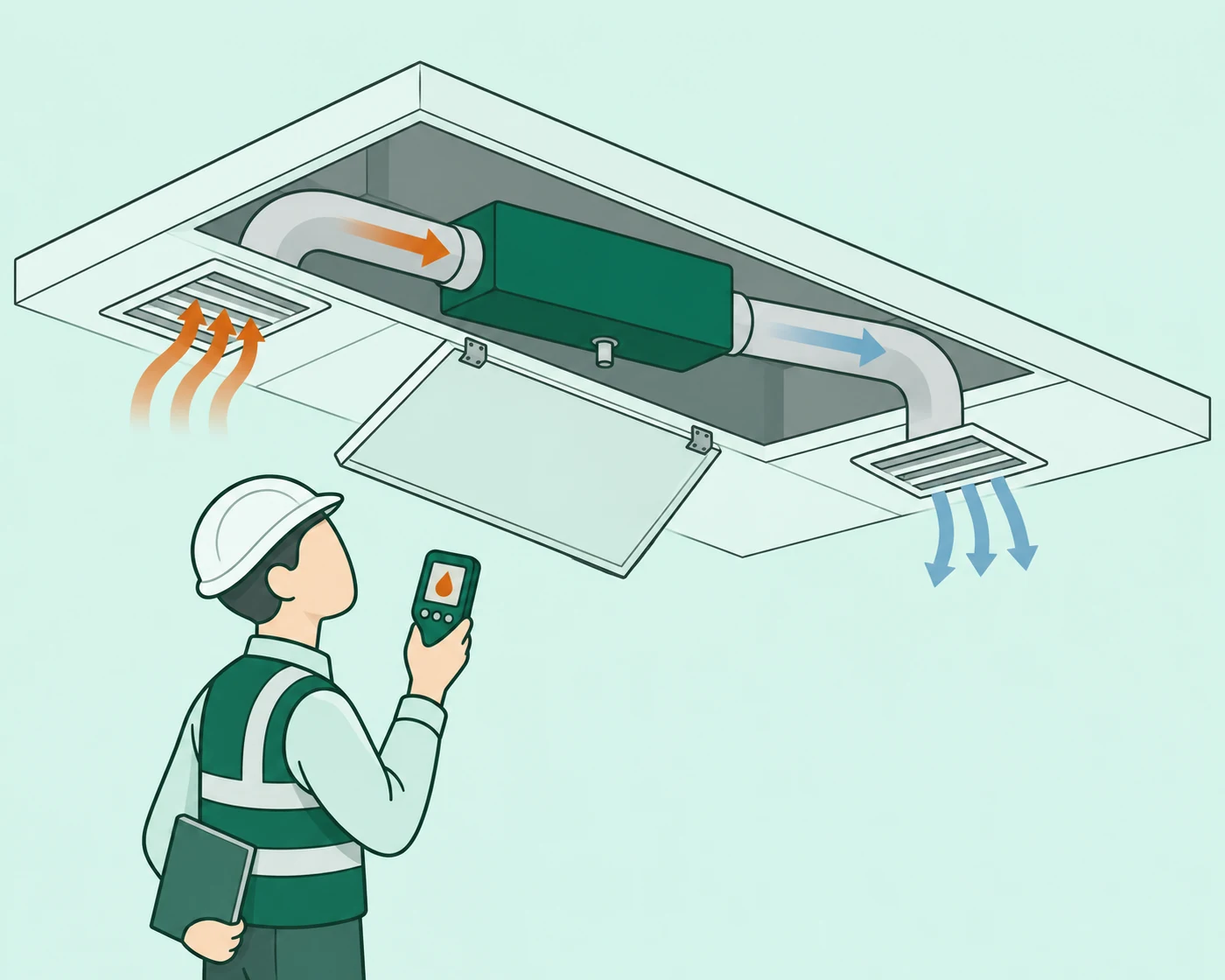
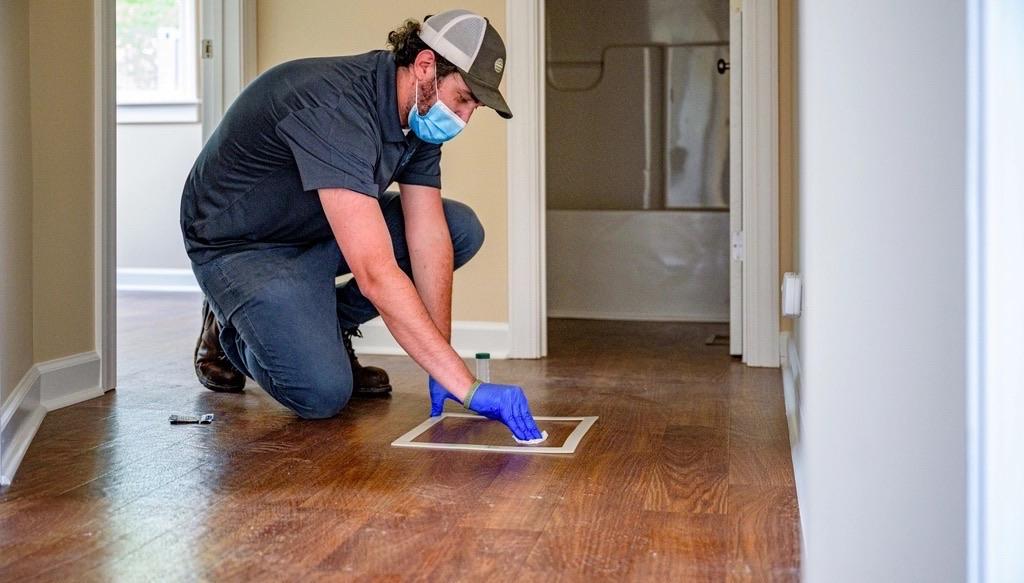
Humidity in every room, surface temperatures at the glazing and the external walls, readings at the AC supply and the fresh-air inlet, ceiling void, drain and power.
- 03
Install and hold the setpoint
Units above the ceiling, dedicated ducts, drain, controller. The setpoint is set below the level mould needs and a readings report confirms it before the new board goes in.
Projects in this space
Every installation is documented with dated humidity readings, photos and the owner's consent. Nothing is published before it is real; the first case studies are being written.
Mould and condensation questions
Does a dehumidifier remove existing mould?
No, and no spec sheet claims it does. Existing growth is removed by a remediation contractor; affected gypsum is replaced. The dehumidifier then holds the humidity so it does not come back.
What humidity stops mould?
Keeping the home below about 60 % RH removes the conditions mould needs; we set the target at about 50 %. The reading inside wardrobes and behind furniture matters more than the one in the middle of the room.
Why does mould come back after painting?
Paint covers the stain; the surface behind it stays damp because the air is still humid. Anti-mould paint delays it. Only drier air stops it.
Can I just run the AC colder?
Colder air holds less moisture, but a colder room also has colder surfaces, so condensation can get worse. The AC controls temperature; a dehumidifier controls humidity. They are different jobs.
Is the mould making us ill?
Residents in reported UAE cases describe allergies, puffy eyes and breathing trouble that eased once the mould was gone. Speak to a doctor about symptoms; our part is the humidity and the filtration that stop the growth returning.
Related guides
Guides
Mould removal in Dubai: cost, method and why it comes back
What mould removal costs in Dubai, when DIY fails on gypsum and concrete, and what every quote leaves out: mould returns unless humidity drops below 60%.
Read the guideGuides
Black mould in the home
What black mould is, where it hides in UAE homes (AC vents, wardrobes, bathroom ceilings), health effects, when to call a professional, what stops it.
Read the guideGuides
Back from holiday to a mouldy home
Six weeks with the AC off can leave every surface mouldy. What to do in the first 24 hours, what to throw out, which AC setting to leave on, the fix.
Read the guide
Talk to an engineer, not a call centre.
Send a photo of the problem and a floor plan on WhatsApp. An engineer replies with the next step, not a script.
- An engineer answers, not a sales desk
- Site survey before any quote
- Installation and service across the UAE
Tell us the space. We size it and quote it.
A floor plan or a few photos on WhatsApp are enough to start. A survey confirms the rest.