Spaces
Humidity control for server rooms and data rooms
Server rooms in the UAE face both ends of the humidity range: condensation on cold surfaces when the room is too humid, static when it is too dry. Ducted dehumidification on its own humidistat holds 40 to 55 % RH independent of the cooling, with alarms and Modbus so the IT team sees it.
Site survey · sizing · installation · maintenance, UAE-wide

What you are seeing
Condensation on cold ducts or under the raised floor
Cooling makes surfaces cold; humid air finds them. Drips near power are the emergency version.
Humidity alarms from the rack sensors
The cooling holds temperature but the humidity drifts, and the sensors tell you every night.
Corrosion on connectors, static shocks in winter
Too humid corrodes; too dry builds static. Both damage hardware, and a room can see both in one year.
Why it happens
Precision cooling is selected for heat, not moisture. It overcools to hold the setpoint and leaves the humidity wherever the room's air exchange puts it. Fresh air leaking in through door seals and cable penetrations arrives humid in summer.
The result is a room that is cold and damp, with the coldest surfaces, ducts and the raised floor, below the dew point. In winter the same room can go the other way and build static.
A dedicated dehumidifier on its own humidistat holds the band regardless of what the cooling is doing. The unit sits outside the room with its drain, ducted in and out, and reports over Modbus.
What changes with a ducted system
40 to 55 % RH held independently of the cooling.
Alarms and Modbus readout to the BMS or the NOC.
No water inside the room: the unit and its drain sit outside, ducted in.
Which system fits
Each pick is a product family, not a model. The survey decides the capacity and the number of units; nothing is sized by floor area alone.
Typical system
Series R: recirculating ducted dehumidifier
Dries the air already in the building and returns it through its own ducts. The usual choice for villas, apartments, offices and basements.
The room's own air needs drying without adding load to the cooling. A recirculating unit mounted outside the room, ducted in and out, holds the band on its own controller.
- Mounted in the corridor void or an adjacent plant space
- Return and supply ducts through the wall; no water inside the room
- Alarm contacts and Modbus to the monitoring system
Typical system
Series T: ducted fresh-air treatment unit
Treats the fresh air before it reaches the rooms: filters it, dries it and exhausts the stale air.
Where the room receives make-up air for pressurisation, the treatment unit dries and filters it before it enters, so the fresh air stops being the moisture source.
- Fits the make-up air path
- Filters dust out of the supply as well
- Combined with Series R in larger rooms
How we fix it, in order
- 01
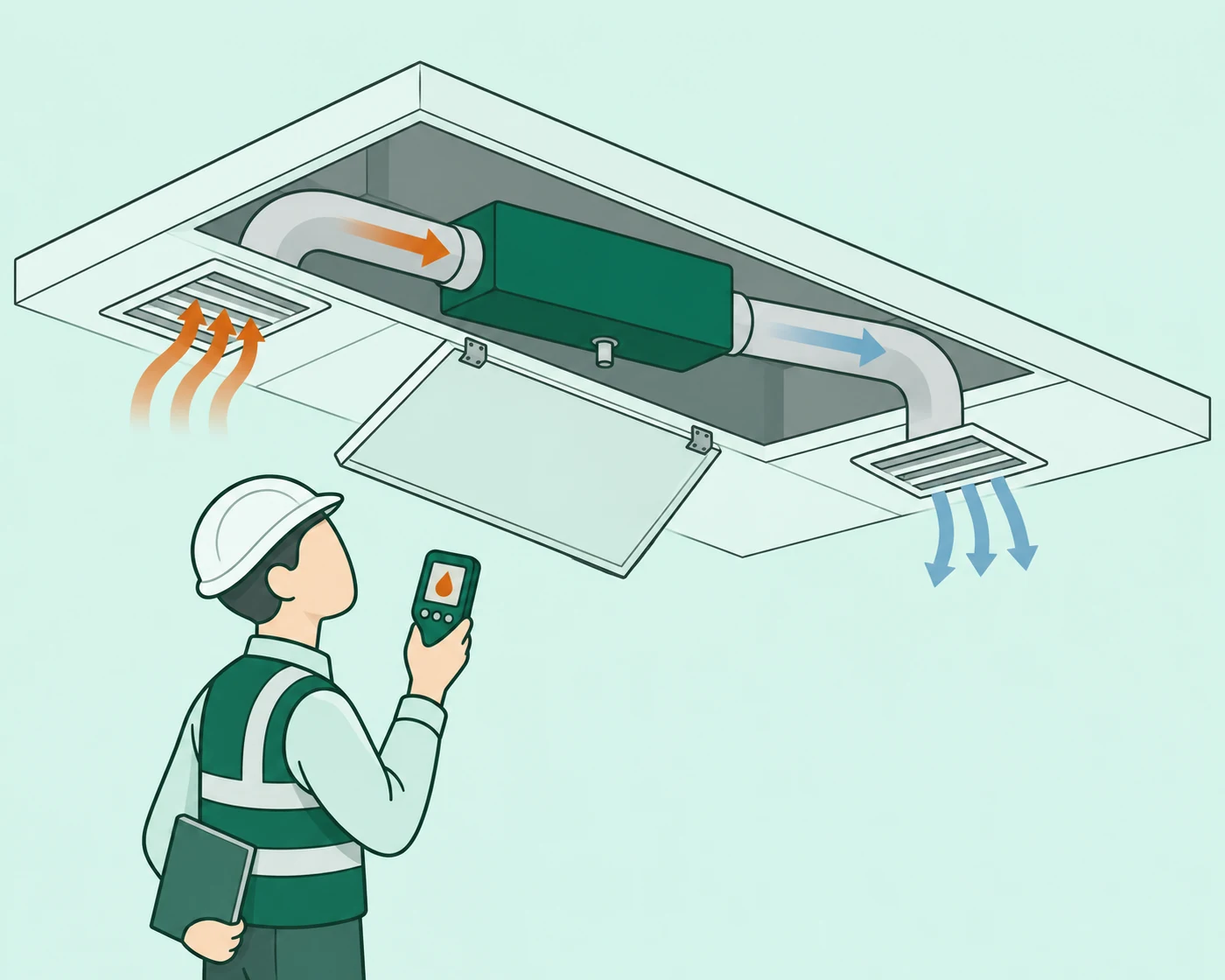
Survey with the IT lead
Readings in the room, at the cold surfaces and under the floor; the cooling layout and setpoints; air leakage paths; the monitoring system and its alarm thresholds; space outside the room for the unit.
- 02
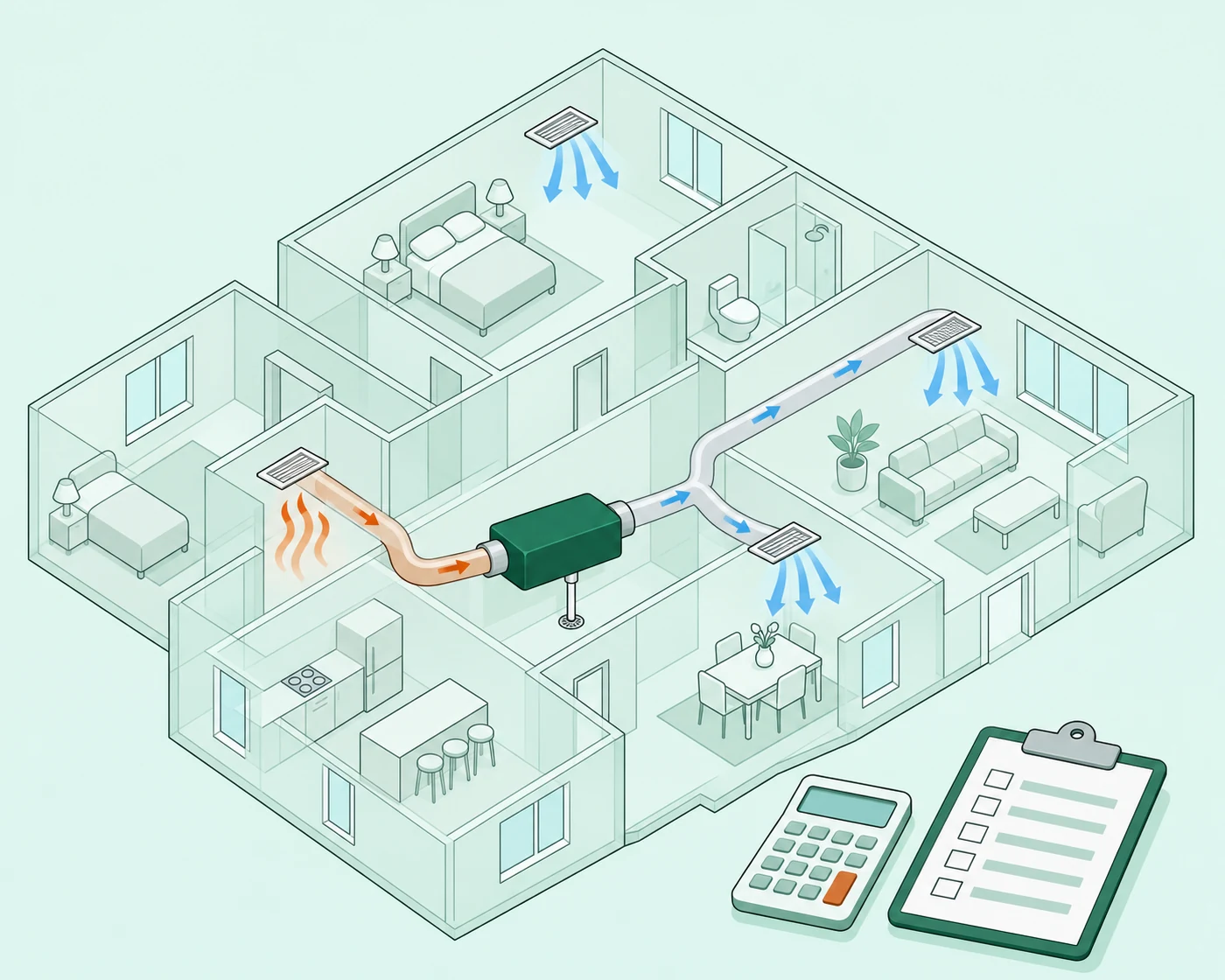
Size for the latent load and the band
Infiltration, make-up air and the target band set the capacity; redundancy is specified where the room requires it. Capacities are datasheet figures.
- 03
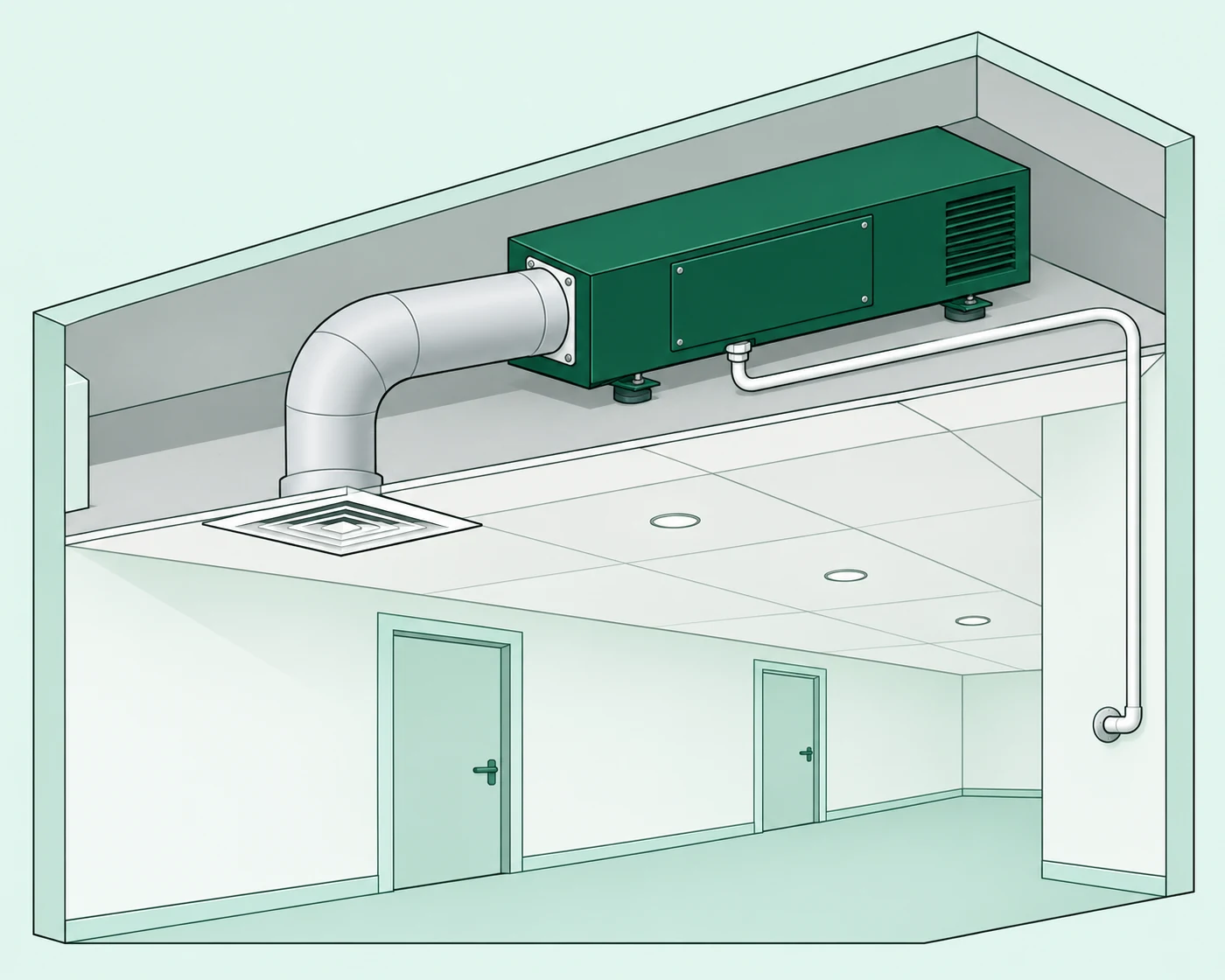
Install outside the room, commission with monitoring
Unit and drain outside the room, ducts through the wall, controller and alarm wiring to the monitoring system. Setpoints and a readings report at handover.
Projects in this space
Every installation is documented with dated humidity readings, photos and the owner's consent. Nothing is published before it is real; the first case studies are being written.
Server room questions
Why does a cooled server room get humid?
Precision cooling controls temperature, not humidity. It can overcool the room and leave the moisture there, while humid air leaks in through doors and cable penetrations. The coldest surfaces then sit below the dew point and condense.
Does the dehumidifier go inside the server room?
No. It is mounted outside, in a corridor void or plant space, with its drain, and ducted in and out through the wall. Nothing that carries water sits over the racks.
Can it integrate with our monitoring?
Yes. Humidity, status and alarms are exposed over Modbus and as volt-free contacts, so the NOC or the BMS sees them with the rest of the room.
What setpoint should a server room hold?
A band of about 40 to 55 % RH keeps surfaces above the dew point and static below the danger level. Your hardware vendor's range takes precedence and is set at commissioning.
Related guides
Guides
The ideal indoor humidity level for a UAE home
45 to 55% RH is the comfort and mould-safe band; above 60% mould and dust mites take off, below 40% static and dry skin. What each level feels like.
Read the guideGuides
Condensation on windows and AC vents
Water on the glass at dawn and drips from the diffuser mean indoor air is above its dew point. Why it happens in Dubai, what it does to gypsum, the fix.
Read the guideGuides
How to measure the humidity in your home
A hygrometer under AED 100 beats any guess: where to place it, when to read it, what 60% overnight means and how to log a week before you call anyone.
Read the guide
Talk to an engineer, not a call centre.
Send a photo of the problem and a floor plan on WhatsApp. An engineer replies with the next step, not a script.
- An engineer answers, not a sales desk
- Site survey before any quote
- Installation and service across the UAE
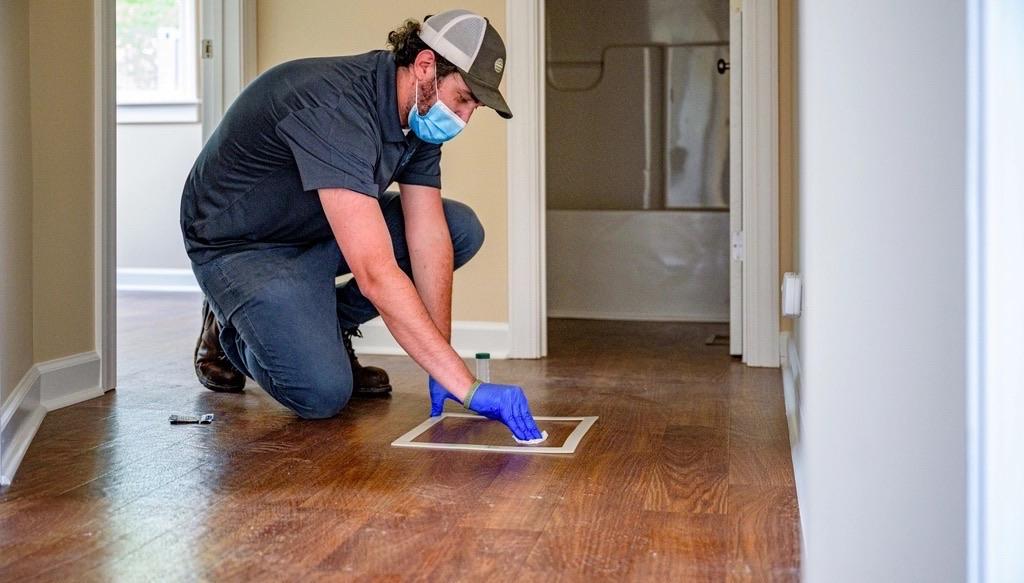
Tell us the space. We size it and quote it.
A floor plan or a few photos on WhatsApp are enough to start. A survey confirms the rest.