Problems
Musty odours and damp wardrobes
A musty smell on clothes, white bloom on leather and mould on shoes mean the wardrobe sits above 60 % RH. Closed cupboards in a humid apartment are the first place it shows. A portable unit in the closet treats one cupboard; whole-home ducted dehumidification fixes every wardrobe, drawer and shoe rack at once.
Site survey · sizing · installation · maintenance, UAE-wide

What you are seeing
Leather bags and shoes going white or spotted
Leather absorbs moisture and feeds mould first. The bloom wipes off and comes back.
A smell that stays after washing
The smell is in the wardrobe air and the wood, not just the fabric. Clean clothes pick it up again within days.
A musty blast when the AC starts
Growth inside the AC unit or duct. Technicians see it after the AC has been off for weeks.
Why it happens
A closed wardrobe has no air movement, so its humidity drifts above the room's. If it stands against an external wall, that wall is the coolest surface in the room and the moisture condenses behind the clothes. Local guidance notes that closed cupboards in humid apartments commonly develop musty odours and surface mould.
Sachets and moisture-absorber boxes pull a few hundred millilitres before they are saturated; a closet dehumidifier treats one cupboard and needs emptying. The humidity in the room feeding the wardrobe is unchanged.
Whole-home ducted dehumidification brings the room, and therefore every closed cupboard in it, below the humidity mould needs, and the carbon stage removes the odour from the air on every pass.
What changes with a ducted system
Every wardrobe, drawer and store room at the same humidity.
Carbon stage removes the odour from the air.
Nothing in the closet: no sachets, no unit, no tank.
Closet dehumidifier or whole-home?
If one wardrobe in an otherwise dry home smells, a small closet unit or a desiccant box is an honest fix. If several cupboards, the shoes and the bathroom all show it, the room air is the problem and the whole home needs holding below 60 %.
Mould in the wardrobe: causes and the fixWhich system fits
Each pick is a product family, not a model. The survey decides the capacity and the number of units; nothing is sized by floor area alone.
Typical system
Series R: recirculating ducted dehumidifier
Dries the air already in the building and returns it through its own ducts. The usual choice for villas, apartments, offices and basements.
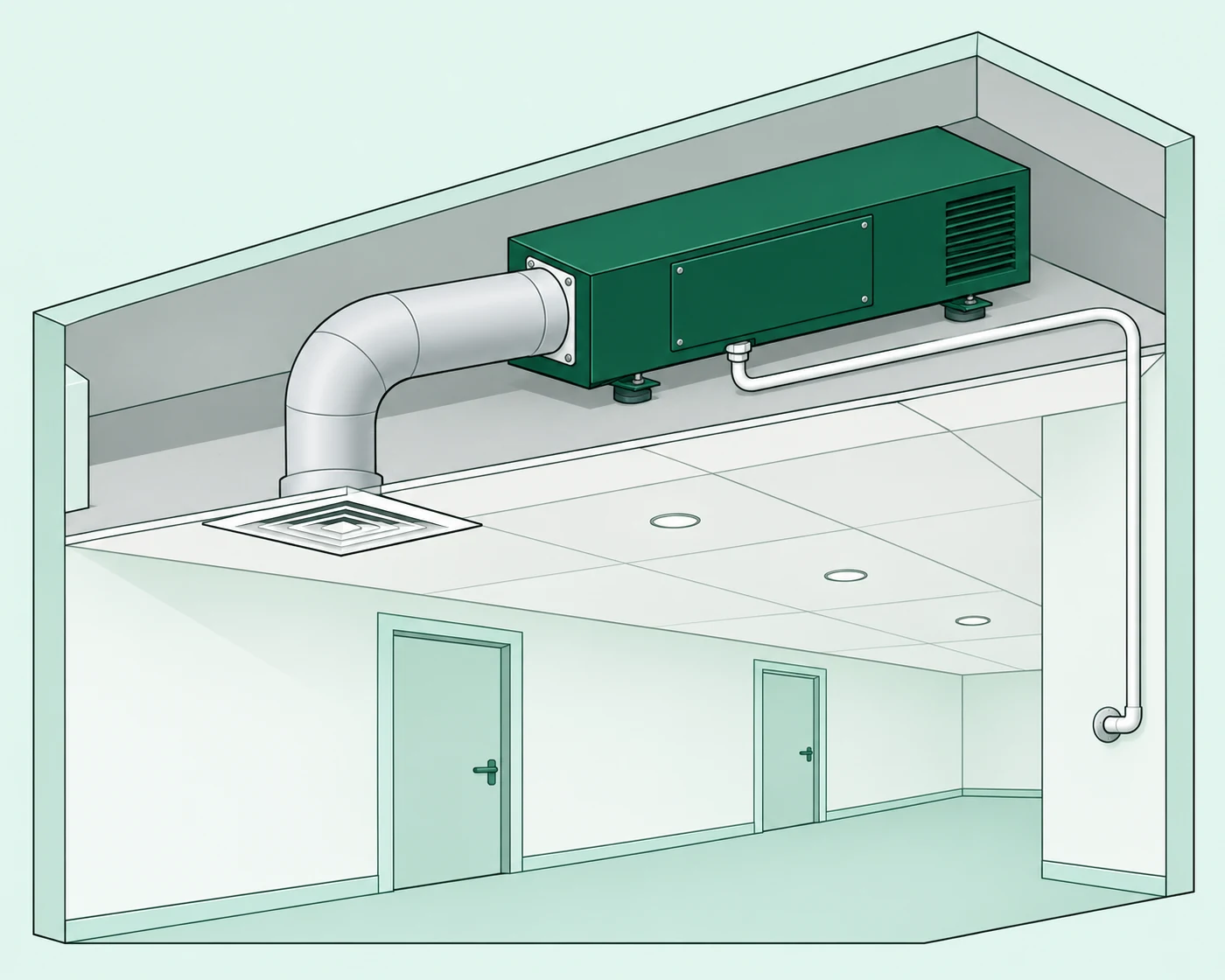
The room air feeding the wardrobes needs drying and filtering. A recirculating unit above the ceiling holds every room on the ducts, and with them every closed cupboard.
- Ceiling void of a corridor or bathroom
- Grilles in the bedrooms where the wardrobes are
- Drains to the AC condensate line
Typical system
Series T: ducted fresh-air treatment unit
Treats the fresh air before it reaches the rooms: filters it, dries it and exhausts the stale air.
Where humid fresh air or the AC's intake is the source, the treatment unit dries it before it reaches the rooms.
- Fits the fresh-air path
- Filters dust and odour from the supply
- Combined with Series R where needed
How we fix it, in order
- 01
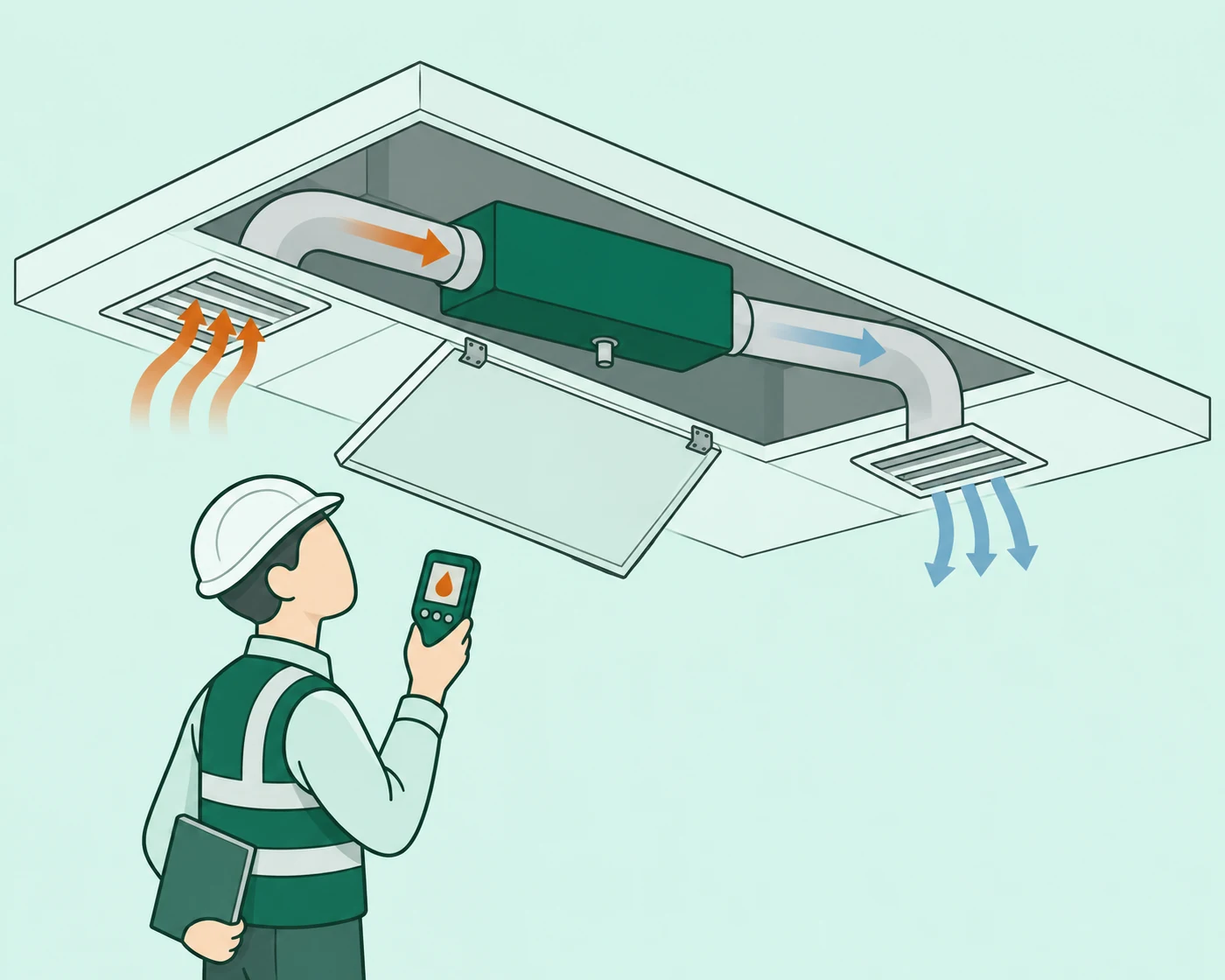
Measure inside the wardrobes
Readings inside each wardrobe and in the room, surface temperature of the wall behind, readings at the AC supply and the fresh-air inlet; ceiling void, drain and power.
- 02
Size for the whole home
Volume, glazing, occupancy, bathrooms and fresh-air supply set the load. Capacity is a datasheet figure.

- 03
Install, set the humidity, air the wardrobes once
Unit above the ceiling, ducts, grilles, drain and controller. Clothes and leather that already hold the smell get one airing or clean; after that the air keeps them dry.
Projects in this space
Every installation is documented with dated humidity readings, photos and the owner's consent. Nothing is published before it is real; the first case studies are being written.
Wardrobe and odour questions
Is a closet dehumidifier enough?
For one wardrobe in a dry home, yes. If several cupboards, shoes and the bathroom all show it, the room air is above 60 % and a closet unit only treats the cupboard it stands in. The whole home needs holding.
Why does my wardrobe smell musty?
No air movement, humid room air and often a cool external wall behind it. Mould grows on the wood, the wall and the leather, and the smell soaks into the fabric.
Will the smell leave the clothes?
Once the air is dry the growth stops and new clothes stay fresh. Items that already hold the smell need one wash or airing; leather needs wiping. After that they stay dry.
What about the musty smell from the AC?
That is growth inside the AC unit or duct and needs cleaning by an AC technician. Holding the home's humidity down stops it coming back as fast. Our duct-cleaning guide explains what cleaning fixes and what it does not.
Related guides
Guides
Mould in the wardrobe: causes and the fix
Closed wardrobes in humid flats sit above 65% RH, so cotton, leather and shoes grow mould. How to clean them, what to throw out, how to stay under 55%.
Read the guideGuides
Musty smell in the house: causes and fix
A musty smell is mould growing somewhere above 60% RH: AC coils, wardrobes, under sinks, behind furniture. How to find the source and remove it for good.
Read the guideGuides
AC duct cleaning in Dubai: what it fixes, what it does not
Duct cleaning removes dust and mould from the ducts; it does not change the humidity that grew the mould. When to clean, published costs, what stops it.
Read the guide
Talk to an engineer, not a call centre.
Send a photo of the problem and a floor plan on WhatsApp. An engineer replies with the next step, not a script.
- An engineer answers, not a sales desk
- Site survey before any quote
- Installation and service across the UAE
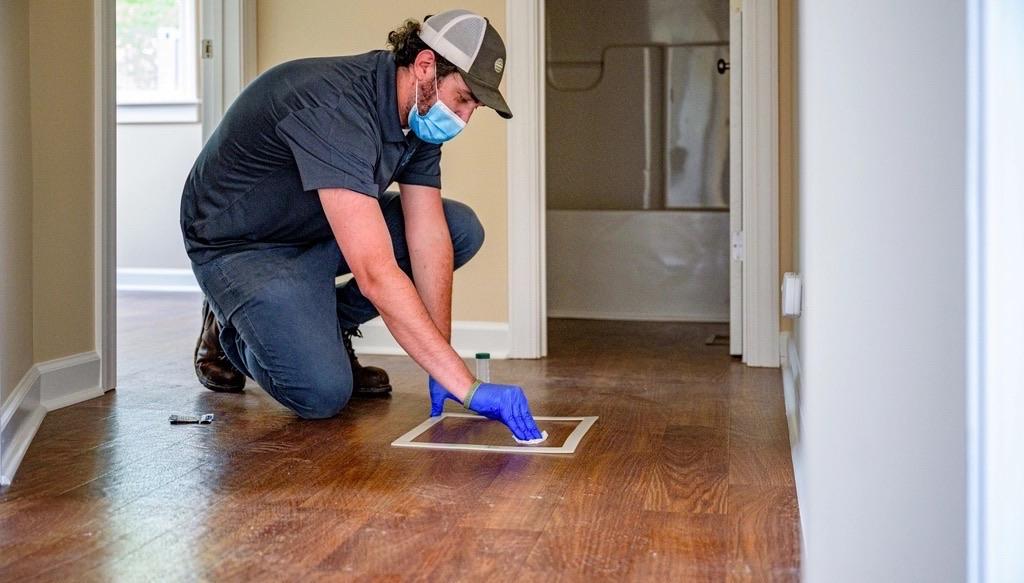
Tell us the space. We size it and quote it.
A floor plan or a few photos on WhatsApp are enough to start. A survey confirms the rest.