Spaces
Dehumidification for indoor pools and spas
An indoor pool evaporates water into the hall all day; the warmer the water and the busier the pool, the more. Ducted pool dehumidifiers sized from pool area, water and air temperature and hall volume stop condensation on glass and steel, corrosion, and the chlorine smell in the rest of the building.
Site survey · sizing · installation · maintenance, UAE-wide

What you are seeing
Condensation running down glazing and the roof structure
Pool halls are glazed and warm; the glass is the coldest surface, so the water in the air lands there first and runs.
Rust on fixings, ductwork and light fittings
Chlorinated moisture corrodes steel fast. Fixings, grilles and the underside of the roof show it within a season.
A chlorine smell in the corridor and the lift
Without its own dehumidification the pool hall pushes humid, chlorinated air into the rest of the villa or hotel.
Why it happens
Water evaporates from the pool surface at a rate set by the water temperature, the air temperature and humidity, and how many people are splashing. Covers help overnight; heaters make it worse, because warmer water evaporates faster.
Ordinary AC cannot handle that load, and it was never designed to. The hall needs its own dehumidification, sized from the evaporation calculation and the hall volume, with the dry air returned over the glazing where condensation starts.
Equipment in a pool hall lives in chlorinated air; the specification for the unit and the duct runs is confirmed per project.
What changes with a ducted system
The hall held at its design humidity, year-round.
Dry air delivered over the glazing, where the condensation starts.
Moisture and chlorine smell kept inside the hall.
Which system fits
Each pick is a product family, not a model. The survey decides the capacity and the number of units; nothing is sized by floor area alone.
Typical system
Series H: high-capacity ducted dehumidifier
For large volumes and heavy moisture loads: warehouses, pool halls, hotel back-of-house and showrooms.
A pool hall is a heavy, continuous load. High-capacity units in the plant room, ducted to the hall, hold the design humidity through the summer and through a full class of swimmers.
- Plant room next to the hall, or a large void
- Supply air ducted along the glazing
- Sized from pool area, water temperature and hall volume
Typical system
Series F: fresh-air dehumidifier with heat recovery
Brings in filtered outdoor air, dries it and recovers energy from the exhaust. For buildings that need a fresh-air supply as well as humidity control.
Pool halls also need fresh air to dilute chlorine by-products. The fresh-air unit dries that air on the way in and recovers energy from the warm, humid exhaust.
- Provides the fresh-air change the hall needs
- Recovers heat from the exhaust
- Often paired with Series H in larger halls
How we fix it, in order
Pool sizing is a calculation, not a guess. The guide linked below walks through it; the survey collects the inputs.
- 01
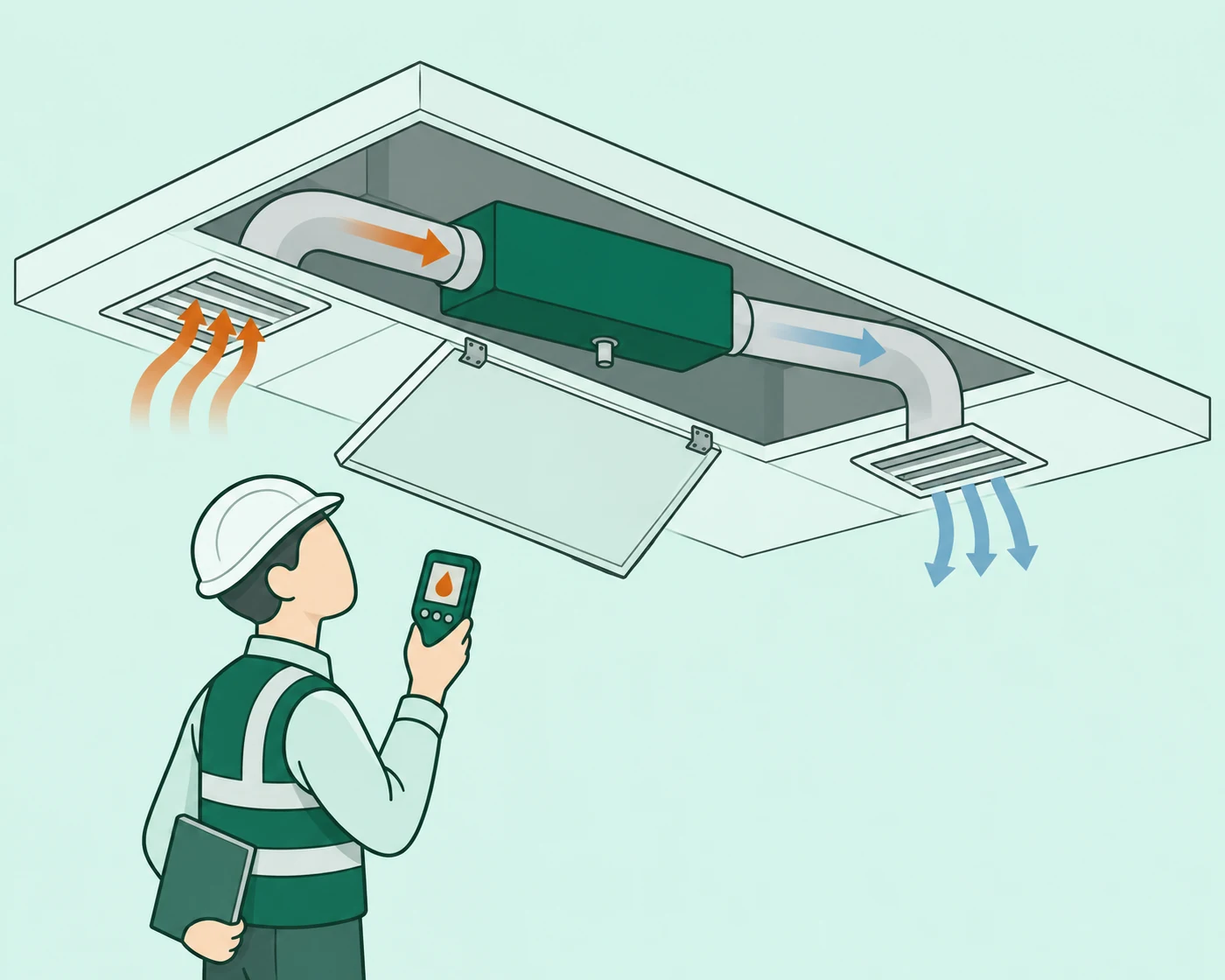
Survey the hall
Pool area, water temperature, hall air temperature and humidity, glazing area, cover use, bather load, hall volume, plant room space, drain and power.
- 02
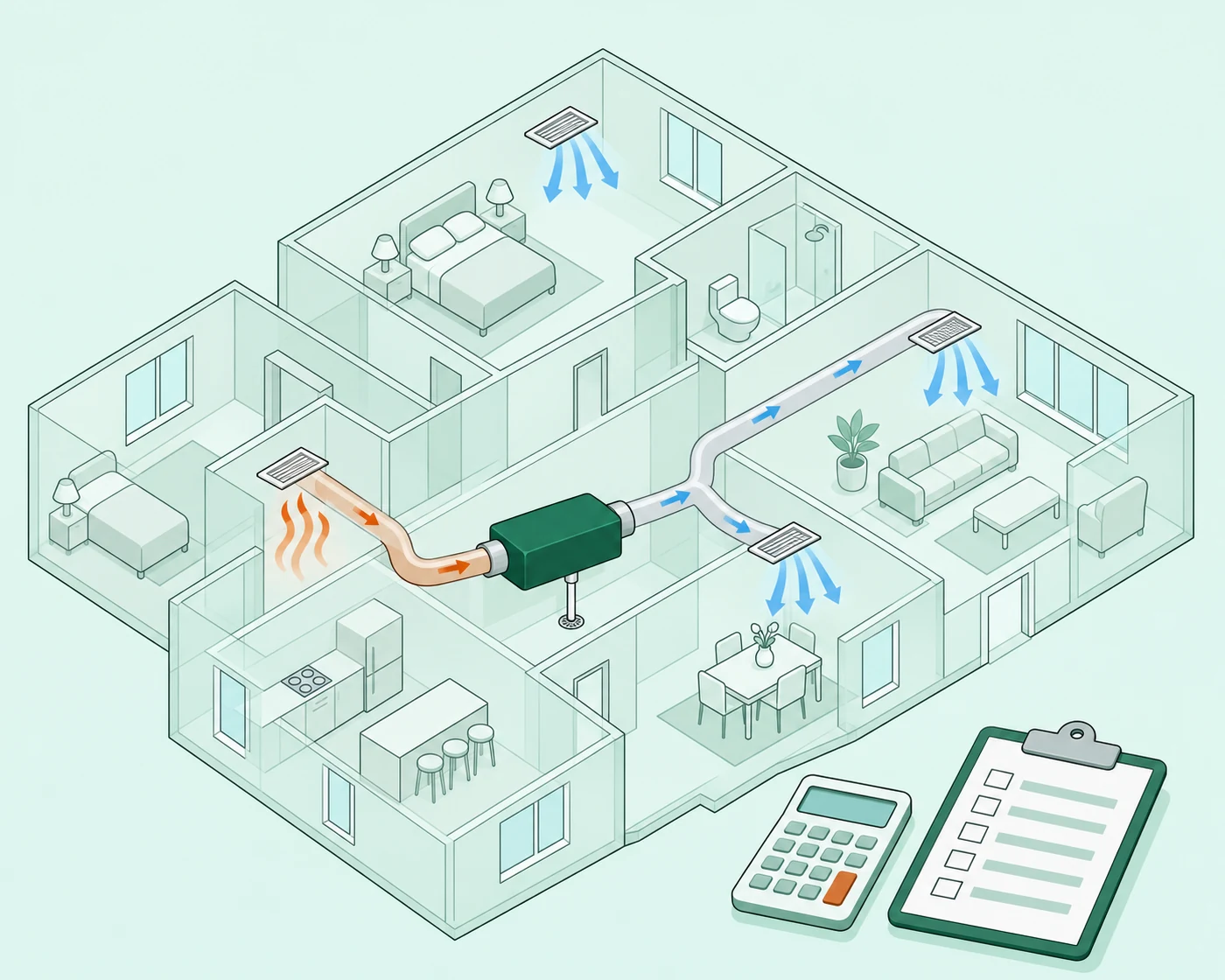
Calculate evaporation, then capacity
The evaporation rate gives the litres per day the hall needs removed; the volume and the fresh-air requirement set the airflow. Capacities are datasheet figures.
- 03
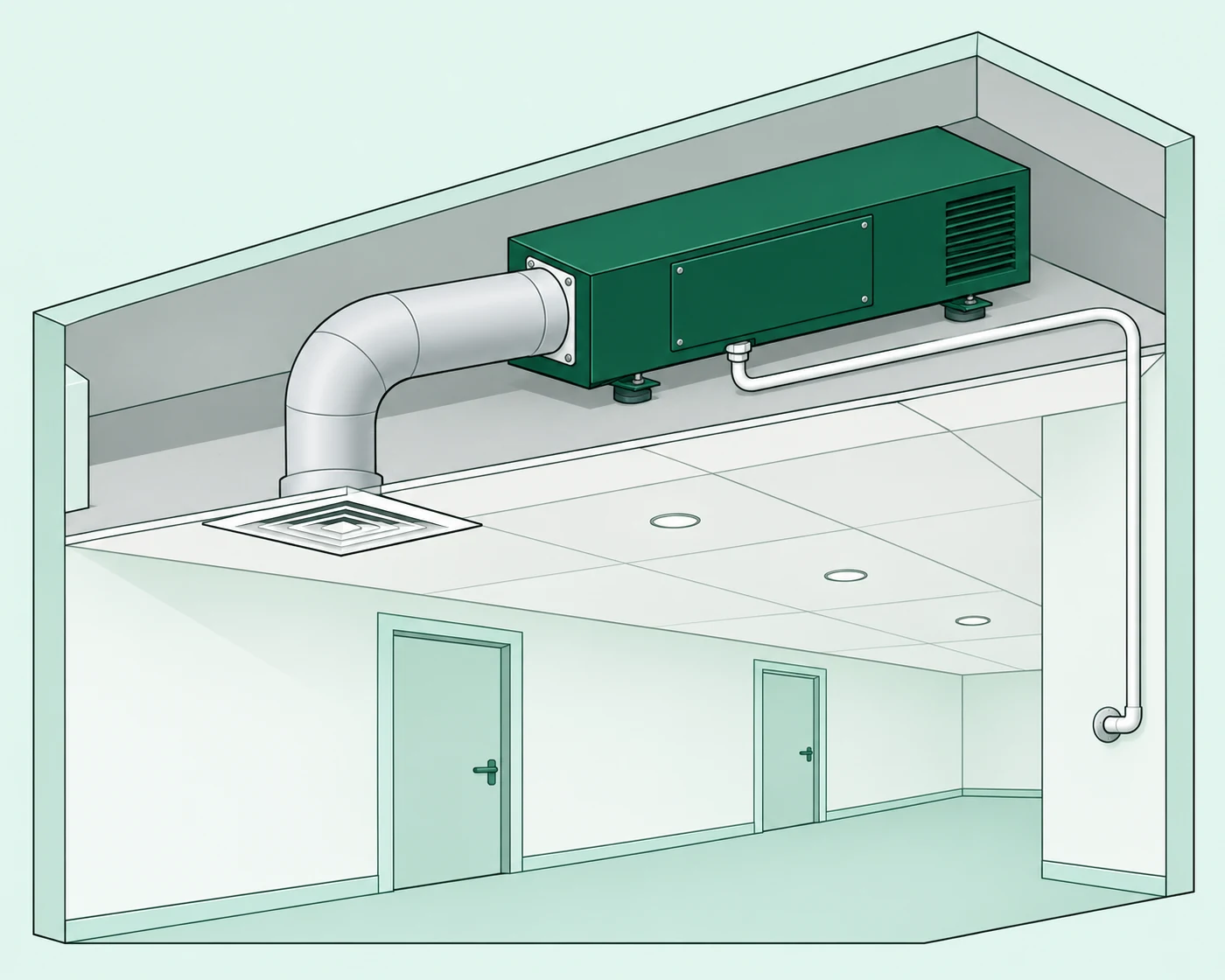
Install, commission, hand over
Units in the plant room, duct runs along the glazing, drain, controller and alarms. Setpoints are agreed with you and a readings report closes the job.
Projects in this space
Every installation is documented with dated humidity readings, photos and the owner's consent. Nothing is published before it is real; the first case studies are being written.
Indoor pool questions
How is a pool dehumidifier sized?
From the evaporation rate, which depends on pool area, water temperature, hall air temperature and humidity, and bather load, plus the hall volume and fresh-air need. Our pool sizing guide shows the calculation step by step.
Does it heat the pool or the hall?
No. It removes moisture from the hall air. Pool and hall heating stay with their own systems; the dehumidifier reduces the load on them by stopping the energy lost to evaporation and condensation.
Villa pool room or hotel pool: same approach?
Same calculation, different scale. A villa pool room often takes one unit in an adjacent plant space; a hotel hall takes several with fresh-air units alongside.
What about the spa, steam room and showers next to the pool?
They add to the load and are included in the survey. Wet areas usually get their own extract and are measured separately so the hall unit is not oversized for them.
Related guides
Guides
How to size a dehumidifier for an indoor pool
Evaporation formula for indoor pools, a worked example for an 8 x 4 m pool at 28 °C, air change needs and why pool halls need 50 to 60% RH.
Read the guideGuides
Condensation on windows and AC vents
Water on the glass at dawn and drips from the diffuser mean indoor air is above its dew point. Why it happens in Dubai, what it does to gypsum, the fix.
Read the guideGuides
Heat recovery ventilation in the UAE
How an ERV recovers cooling energy from exhaust air, what it saves in Dubai conditions, when a bypass helps, and why an ERV alone does not fix humidity.
Read the guide
Talk to an engineer, not a call centre.
Send a photo of the problem and a floor plan on WhatsApp. An engineer replies with the next step, not a script.
- An engineer answers, not a sales desk
- Site survey before any quote
- Installation and service across the UAE
Tell us the space. We size it and quote it.
A floor plan or a few photos on WhatsApp are enough to start. A survey confirms the rest.